
A Culinary Journey Through Maya Ka’an
Maya Ka’an sits in the center of Quintana Roo, in the state’s Maya Zone, and its food has little to do with the resort buffet. Here the recipes belong to families, the ingredients come from the milpa and the backyard garden, and some of the cooking methods go back centuries. If you want to taste where Mexican gastronomy comes from, this is the place for a culinary journey.
Traditional Maya dishes to try
Poc chuc
Thin cuts of pork marinated in sour orange juice and grilled over charcoal, served with pickled red onion, a roasted tomato salsa (chiltomate) and habanero on the side. The name comes from the Maya words for roasting and charcoal, which tells you most of what you need to know. The sour marinade keeps the meat tender and gives it a bright edge against the smoke. Look for it in cocinas económicas, the small family-run eateries that serve homemade lunches.
Sikil p’ak
A thick dip of toasted, ground pumpkin seed, roasted tomato, cilantro and a little onion, often sharpened with a splash of sour orange. It comes to the table with fresh tortillas or totopos as a starter: nutty, smoky and slightly tangy. Few dishes say more about the milpa, since squash, tomato and corn all end up on the same plate.
Tamales colados
Colado means strained, and that is the whole secret. The corn masa is dissolved in water, passed through a cloth, then cooked with lard and achiote until it thickens, so the finished tamal is far silkier than the ones you may know from elsewhere in Mexico. It is filled with chicken or turkey, wrapped in banana leaves, steamed, and topped with a red sauce of tomato and achiote. Across the peninsula this is a special-occasion tamal, tied to Day of the Dead and family celebrations.
Markets and cooking experiences
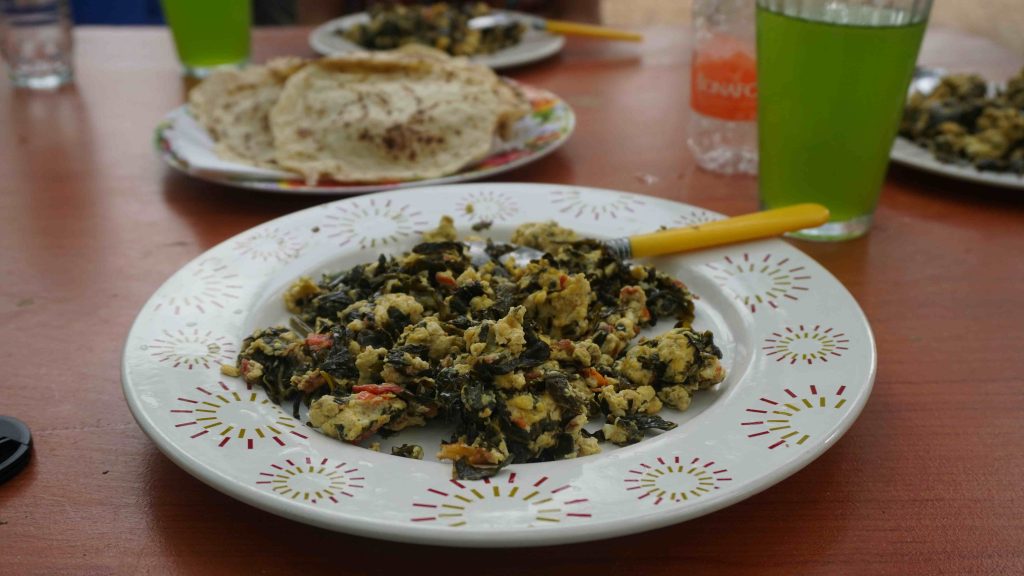
Start in Felipe Carrillo Puerto, the main town of the region. Its municipal market keeps a section for small producers from the surrounding communities, and that is where you will find chaya (a leafy green that grows in almost every Maya backyard), local spices and tortillas made by hand.
Cooking here is something you take part in rather than watch. In the village of Señor, for example, the Xyaat cooperative offers hands-on visits: a walk to the milpa, a lesson in making tortillas by hand, and meals built on their grandmothers’ recipes. Book a few days ahead. These are small, family-run experiences, not scheduled classes.
Community-based culinary tourism
Several Maya communities in the region run their own tourism cooperatives, and food is part of every visit. In Muyil, Community Tours Sian Ka’an pairs the archaeological site and the canals of the Sian Ka’an Biosphere Reserve with a traditional meal cooked by local families. Eating that food where it is grown, with the people who grow it, is the most direct way to understand how Maya culture, food and land hold together.
In short
A culinary journey through Maya Ka’an means poc chuc from a village kitchen, sikil p’ak ground in a molcajete, tamales that took a family the better part of a day, and market stalls where the growers are the sellers. For travelers who want to reach the roots of Maya culture, it is a destination worth planning a trip around.


