
Archaeological Sites of the Riviera Maya: The Most Impressive Ones
The Riviera Maya is much more than beaches and cenotes. Along this coast, and a short drive inland, stand some of the most fascinating cities of the ancient Maya, a legacy that has outlasted centuries of jungle, hurricanes and salt air. Whether you are a history buff or simply curious, these places stay with you.
Here are four of the most impressive archaeological sites in the Riviera Maya and its surroundings.
1. Tulum: The Walled City by the Sea
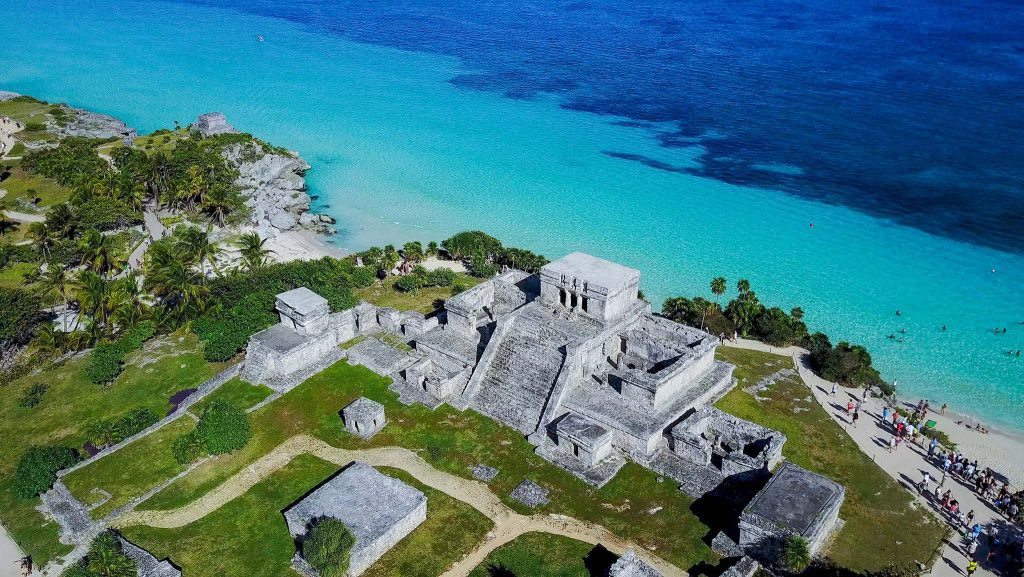
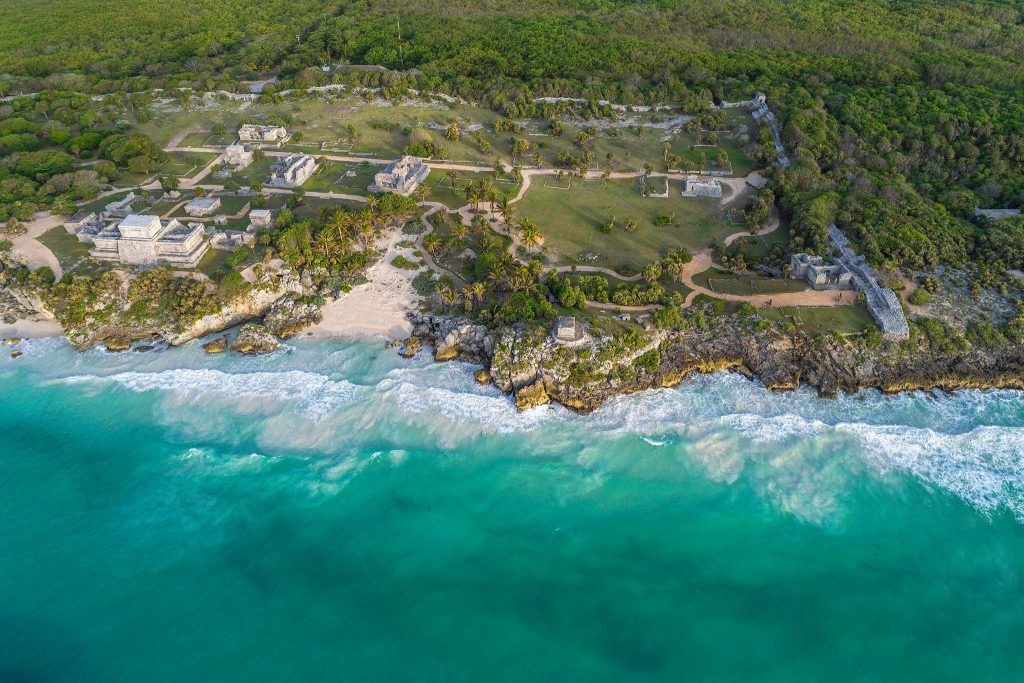
Tulum is one of the most recognizable archaeological sites in Mexico, and the reason is obvious the moment you arrive: its temples sit on a 12-meter cliff above the Caribbean. This walled city was a busy Maya port in the Postclassic period and is one of the best-preserved coastal Maya sites. Grey stone, white sand and turquoise water in a single frame; it is hard to take a bad photo here.
Since 2024 the site is reached through Parque del Jaguar, the protected area that now surrounds it. Tickets (park plus INAH entry) are sold at the park’s ticket office, and electric shuttles run to the ruins. Rules and prices change, so check before you go.
- What to see: the Temple of the Wind God, the Temple of the Frescoes, El Castillo and the small beach below the cliff, when it is open for swimming (ask on arrival).
- Tip: Arrive early to beat the crowds and the heat.
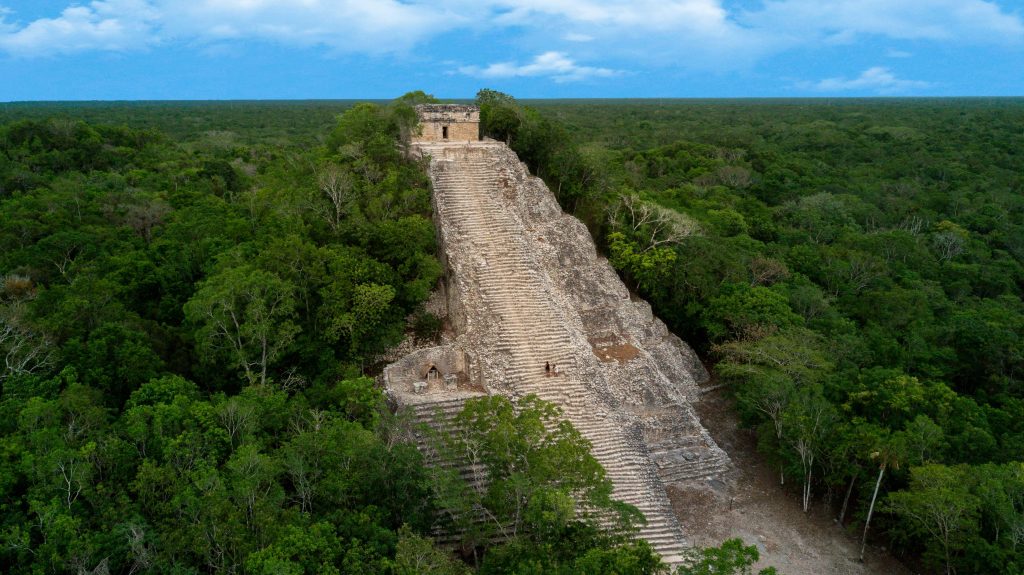
2. Cobá: The Tallest Pyramid in the Mexican Caribbean
About 45 minutes from Tulum (47 km inland), Cobá drops you in the middle of the jungle. This was one of the great Maya cities of the Classic period, and its landmark is Nohoch Mul, a 42-meter pyramid, the tallest in the Mexican Caribbean. Cobá also sits at the hub of the largest network of sacbés, the raised white roads the Maya built; the longest runs some 100 km west to Yaxuná, near Chichén Itzá.
- What to see: Climb the roughly 120 steps of Nohoch Mul. After several years closed, the climb reopened in late 2025 over a new wooden staircase, in small groups and within set hours, so expect a wait. The view over the treetops and the lagoons is worth it. The site is big, so rent a bicycle or hire a tricycle taxi to move between the groups of buildings.
- Tip: Bring insect repellent and water. It is hot and humid under the canopy.
3. Muyil: Jungle, Lagoon and Ruins
If you like your archaeology with nature around it, Muyil is the one. About 25 km south of Tulum, on the doorstep of the Sian Ka’an Biosphere Reserve, this was a trading settlement that reached the sea through the lagoons and their canals. It sees a fraction of Tulum’s visitors, which makes for a calmer visit. The site closed for restoration work in 2024 and reopened to the public in early 2026.
- What to see: El Castillo, Muyil’s main pyramid, the jungle paths between the buildings and, once you reach the lagoon, a boat ride along the canals the Maya used.
- Tip: After the ruins, follow the wooden boardwalk through the jungle to the lookout and the lagoon, where the boats into the heart of Sian Ka’an leave from.
4. Xel-Há: Nature and Archaeology Combined
Xel-Há is famous today as a water park, but the name belonged first to a Maya port that, in the Early Classic period, was the largest and most important on this coast; later it most likely served as Cobá’s outlet to the sea. The archaeological site, run by INAH, sits on the west side of the federal highway, right across from the park. It is small and quiet.
- What to see: the Edificio de los Pájaros (Building of the Birds), with murals painted between AD 200 and 600, and the Grupo Jaguar. Then, across the road, the park’s inlet and canals for snorkeling.
- Tip: Buy your park ticket in advance to make the most of the water activities.
The archaeological sites of the Riviera Maya are a window into the Maya past and, just as much, into the jungle and the sea that shaped it. From the cliff at Tulum to the treetops at Cobá and the quiet paths of Muyil, each one is different. Bring your camera, comfortable shoes and water, and give yourself time.
Follow us on Instagram for travel inspiration and the best of the Mexican Caribbean. ✨

