
Archaeological Sites Near Mahahual
Mahahual, a quiet beach town on the Grand Costa Maya, is best known for its coastline and clear water. It is also a good base for anyone who likes history. Mahahual itself has no major ruins, but several of the most interesting Maya cities in southern Quintana Roo are within a day trip. These are the archaeological sites near Mahahual that deserve a place on your itinerary.
1. Chacchoben: the city in the jungle
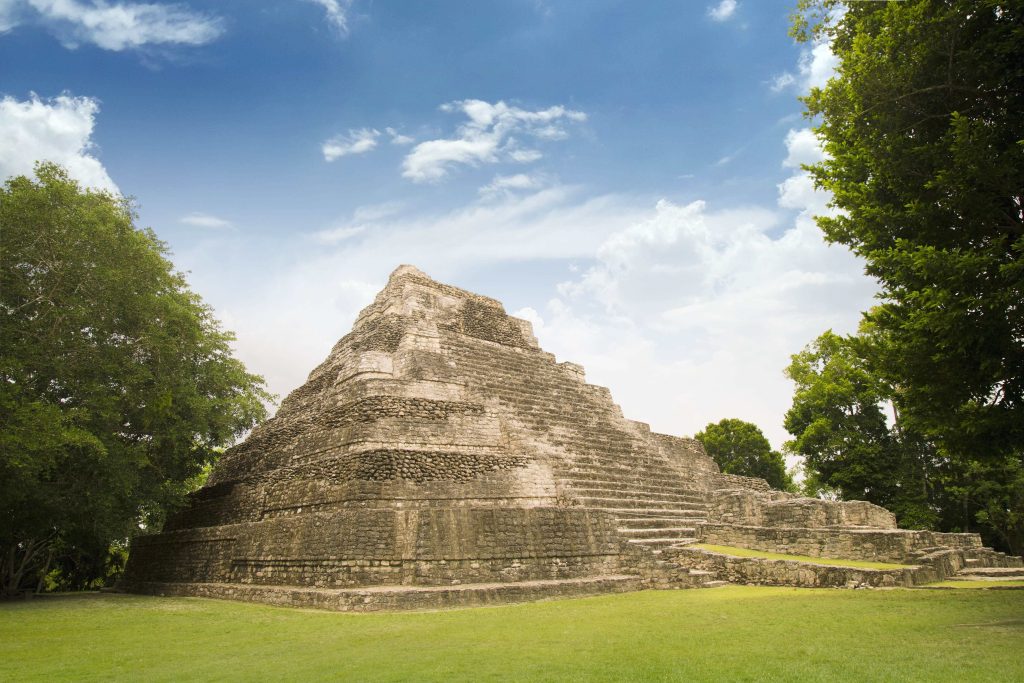
About 70 km from Mahahual, a little over an hour by car, Chacchoben is the best-known archaeological site in the area. According to INAH, the first settlers arrived around 300 BC, and the city took the shape you see today in the Early Classic period, around 250 AD.
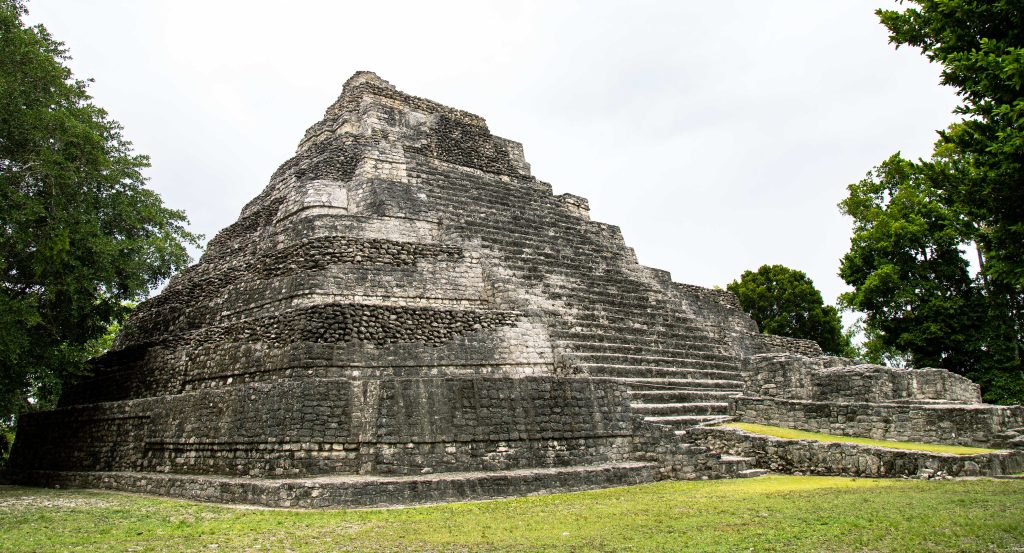
Three restored pyramids sit along a circular path through the forest, together with smaller temples, ceremonial platforms and plazas. The main pyramid is the highlight; stand at its base and the scale of the place becomes clear. A guided visit is worth it, since guides tell the story of a city that kept growing for some 500 years and explain its ties to the larger Maya capitals of the region.
2. Dzibanché: capital of the Snake Kingdom
Dzibanché is farther out, about 185 km from Mahahual (close to three hours by car), and it is one of the largest and most important Maya sites in the region. The settlement covers more than 40 square kilometers and is made up of four monumental groups connected by sacbés, the white Maya causeways. Occupied from around 300 BC, the city reached its peak between roughly 400 and 700 AD.
What sets Dzibanché apart is its link to the Kaan or Kaanu’l dynasty, the “Snake” kings who later ruled from Calakmul and dominated much of the Maya world. Dzibanché was their first capital, and its monuments record the dynasty’s conquests. The main group holds large pyramids and plazas. The best-known building is the Temple of the Owl (Templo del Búho), a funerary temple whose stairway leads down to a tomb, and beside it stands the Temple of the Cormorants, the largest pyramid in the group.

3. Kohunlich: the city of the masks
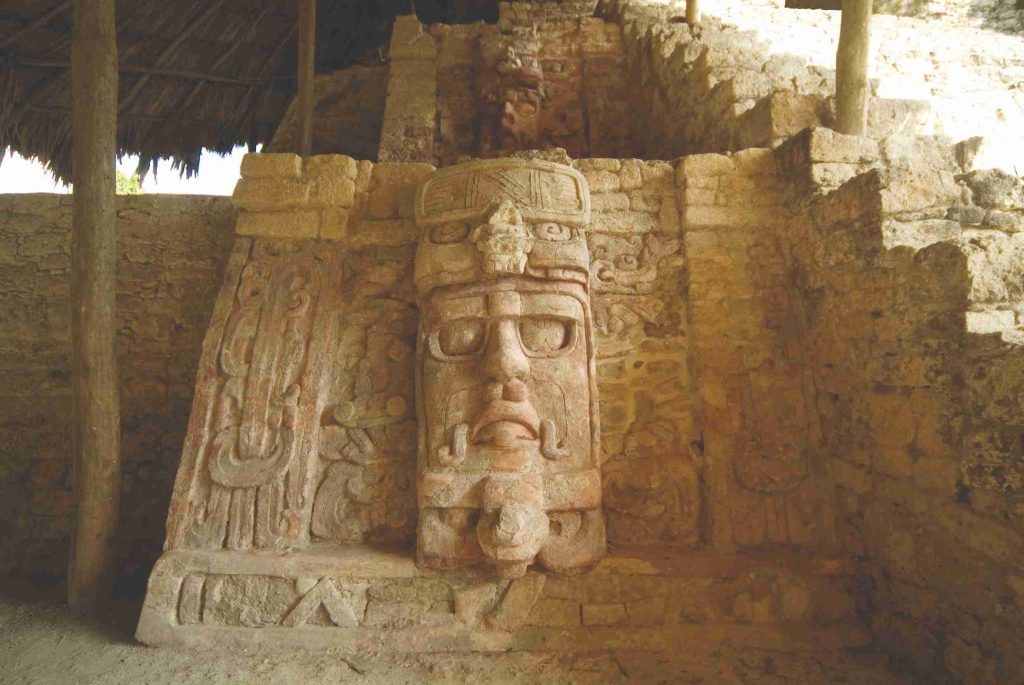
Kohunlich lies about 170 km from Mahahual, some two and a half hours inland along the Chetumal-Escárcega highway. Its fame rests on the Templo de los Mascarones (Temple of the Masks), an Early Classic building flanked by large stucco masks. They portray royal figures wearing the attributes of the sun, associated with the sun god Kinich Ahau, and their size and detail say a great deal about the religious and political world of the city’s rulers.
Kohunlich is a large site, with residential complexes, plazas and ceremonial buildings; its heyday came in the Late Classic, between 600 and 900 AD. It gets far fewer visitors than the famous sites farther north, so you can walk it at your own pace. The forest presses in on every side, and you may well hear, or see, howler monkeys along the paths.
4. Oxtankah: a Maya city on the bay
Oxtankah sits on the shore of Chetumal Bay, 25 minutes north of downtown Chetumal and about 155 km (roughly two and a half hours) from Mahahual. INAH describes it as the largest and most important pre-Hispanic city found on the bay. The first Maya settled here around 600 BC and stayed until about 1100 AD. The city’s greatest prosperity came in the Early Classic (250 to 600 AD), when its rulers governed the surrounding settlements and the city spread as far as Tamalcab island.
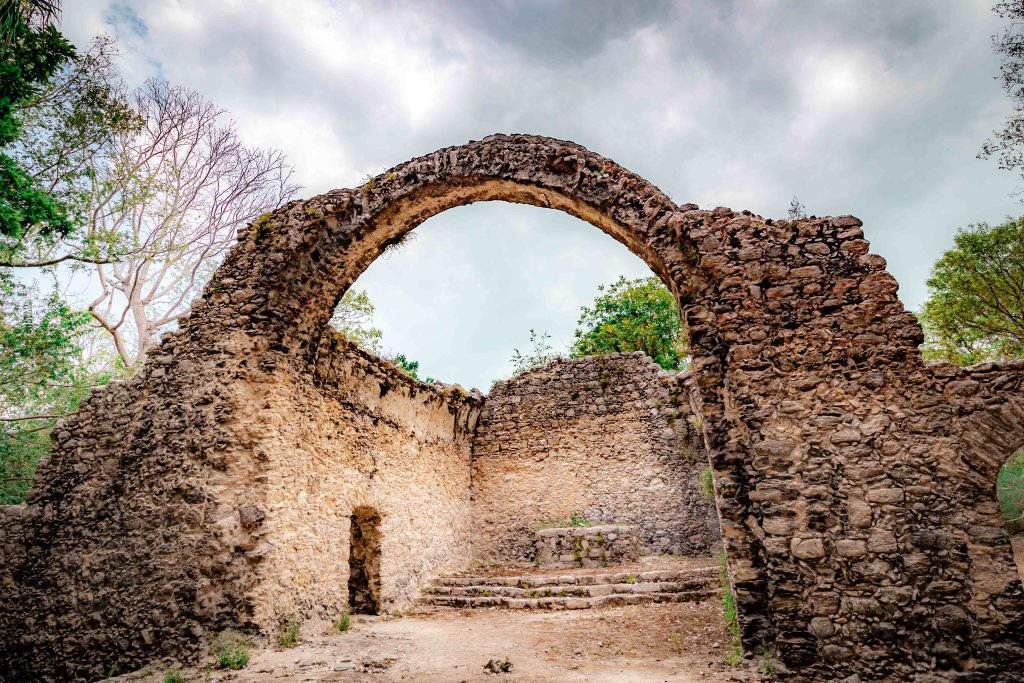
The site has plazas, pyramids and, unusually, a 16th-century Spanish chapel. Its position on the water sets it apart from the inland cities: here the Maya traded by sea, and it is a good place to understand how the coast shaped life in this civilization.
5. Kinichná: the House of the Sun
Kinichná is part of the Dzibanché complex, about 2 km north of the main group, and it is the natural add-on to that visit. Its name means “House of the Sun”, after a stucco glyph found there, and its centerpiece is a massive three-tiered acropolis some 35 meters high that rises above the forest.
It is small next to Dzibanché or Kohunlich, but it was one of the four monumental groups of the same city, linked to the others by sacbés and part of the same political and religious network. If you are already at Dzibanché, the detour takes minutes and is well worth it.
Mahahual may be a small beach town, but with these sites within reach it makes a fine base for exploring the ancient Maya world: the pyramids of Chacchoben, the masks of Kohunlich, the Snake Kingdom’s first capital at Dzibanché and a coastal city at Oxtankah. Mornings among the ruins, afternoons back on the beach. That is a hard combination to beat.

