
Discover the Archaeological Sites of Tulum
Tulum is one of Mexico’s most captivating destinations, and not only for its beaches. It was also one of the last cities the Maya built and lived in. What sets the Tulum archaeological site apart is where it stands: a walled city on a cliff above the Caribbean Sea, and today one of the most visited archaeological sites in Mexico. Here is what you need to know to make sense of its history before you walk through the gate.
1. The archaeological site of Tulum: an ancient Maya port
Tulum was among the last cities built and inhabited by the Maya. It flourished in the Late Postclassic, between the 13th and 15th centuries, and was still occupied when the Spanish arrived in the early 16th century. It worked as a trading port on the sea routes along the Caribbean coast, and its position on the cliff let its rulers keep an eye on the canoe traffic below.
The name Tulum means “wall” or “palisade” in Maya, a reference to the wall that encloses the main complex. Walled Maya cities are rare, and that is part of what makes this one special.
2. The Temple of the Descending God: a divine enigma
One of the most recognizable buildings on the site is the Temple of the Descending God, set on the high ground near the edge of the cliff. Above its doorway, a stucco relief shows a winged figure diving headfirst, an image that archaeologists have linked to bees and to fertility, both central to Maya cosmology.
- What to see: Look closely at the Descending God relief above the door, then turn around: from this part of the site, the view of the Caribbean is as good as it gets.
- Fun fact: The temple’s only doorway opens to the west, toward the sunset, a detail that has fed several theories about its astronomical or ritual meaning.
3. El Castillo: the jewel of Tulum
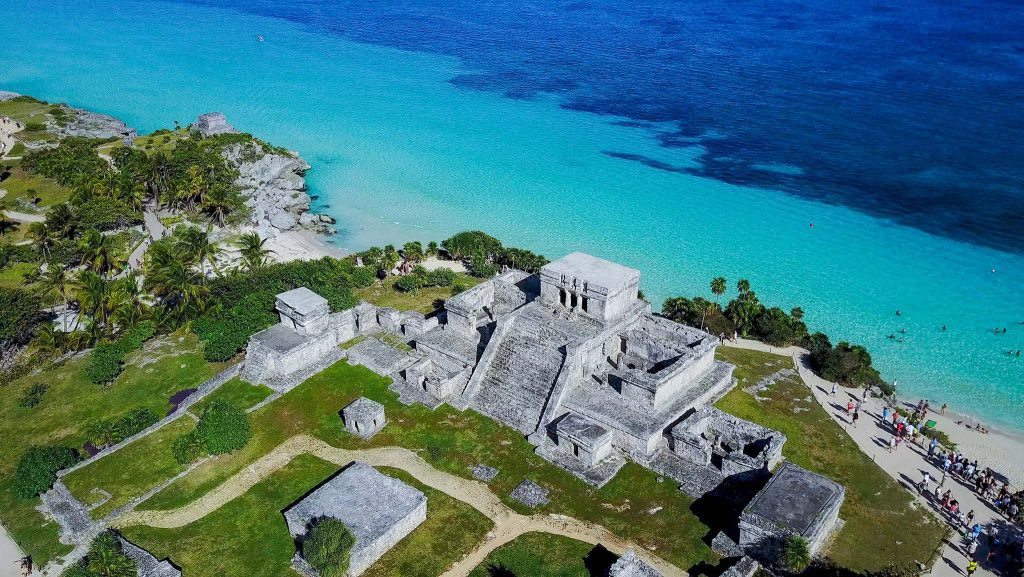
The tallest and most famous building at the site is El Castillo, which dominates the landscape from the edge of the cliff. It served as a ceremonial center and, very likely, as a lighthouse too: a light kept burning in the shrine at the top would have guided canoes through the gap in the reef that protects this stretch of coast.
- What to see: El Castillo impresses by size and setting alike, and the view of the sea from its base explains why half the photos of Tulum look the way they do. Don’t miss the serpent columns framing the entrances of the upper temple and the two masks carved into its corners.
- Tip: Climb the raised lookout beside El Castillo for a panoramic view of the whole complex and the cove below.
4. The Temple of the Frescoes: a glimpse of Maya art
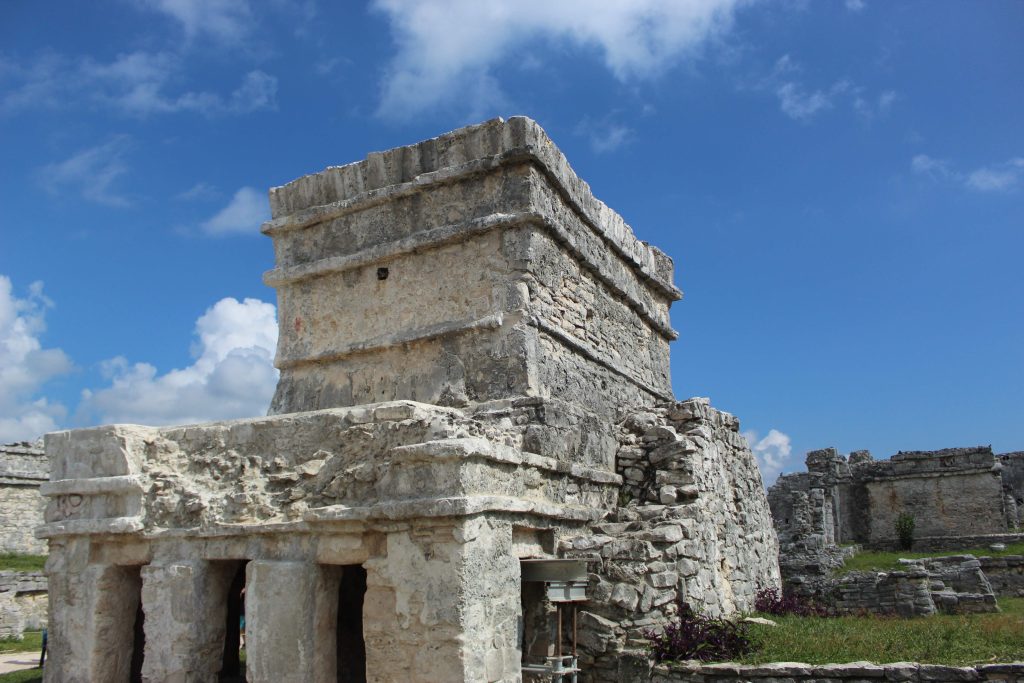
The Temple of the Frescoes is one of the most fascinating buildings in Tulum, thanks to the murals that have survived inside it. The building also served as an observatory to track the movements of the sun. The paintings depict gods and scenes from Maya life, and stucco figures decorate the facade.
- What to see: You can’t go in, but from outside you can make out the murals of divine figures and mythological beings, along with the architectural details typical of Tulum’s late Maya style.
- Tip: Pay attention to the large masks on the temple’s corners. Their serpent features identify them with Itzamná, the principal god of the Postclassic Maya.
5. The wall of Tulum
The wall around the ancient city is one of the most distinctive features of the archaeological sites of Tulum. Built to protect the city from potential invaders, it runs along three sides; the fourth side is guarded by the sea itself. The long side, parallel to the coast, measures about 400 meters, the two short sides about 170 meters each, and the wall stands between 3 and 5 meters high.
- What to see: As you walk the site you’ll pass well-preserved stretches of the wall that once closed off the city. Five narrow gateways were the only way in by land, for nobles and for the merchants who arrived with their goods.
- Tip: Take a moment to picture daily life inside these walls, in a city that lived off seaborne trade and farming.
6. Playa Ruinas: nature and archaeology combined
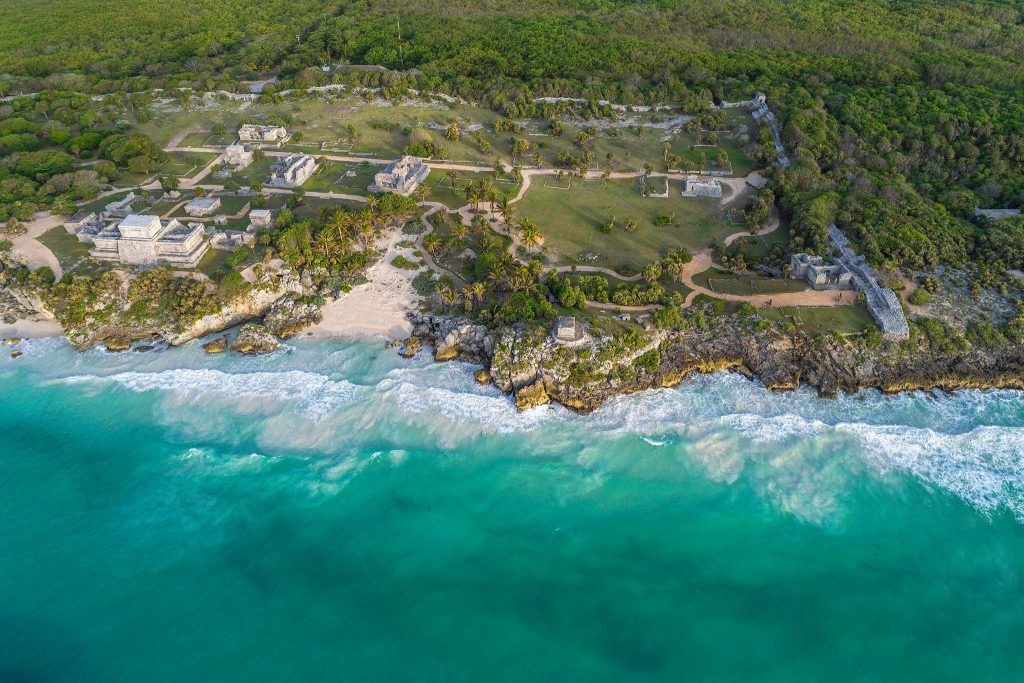
Below the ruins is a small cove known as Playa Ruinas, where you can swim in clear Caribbean water with the Maya buildings above you on the cliff. It’s beautiful in its own right, but the pairing of history and nature is what makes it special.
- What to do: After you’ve walked the site, go down to the beach and cool off with one of the best archaeological backdrops you’ll find anywhere.
- Tip: Bring a swimsuit and a towel if you plan to take a dip. Access to the beach depends on the season and on the rules in force at the Parque del Jaguar, so ask at the entrance on the day of your visit.
Tips for visiting the Tulum archaeological site
- Arrive early: The site fills up fast, especially in high season. Come first thing in the morning to avoid the crowds and enjoy the views in peace.
- Sun protection: Much of the site has no shade. Bring sunscreen, a hat and water to stay hydrated.
- Guided tours: Consider hiring a guide to learn more about the history and symbolism of the buildings. Local guides offer an interesting perspective on Maya life and on what these ruins meant.
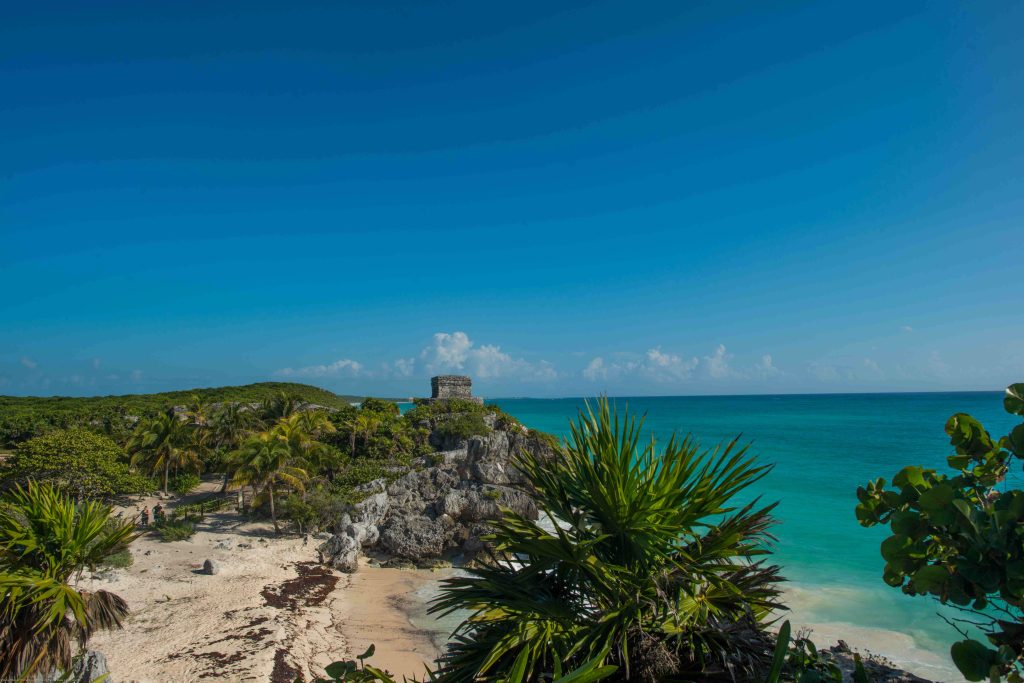
The archaeological sites of Tulum open a window onto the Maya past in a natural setting few places can match. The walled city, with its temples looking out over the Caribbean, is a reminder of how far Maya civilization reached and how closely it lived with the sea and with trade. If you’re in the Riviera Maya, don’t let the chance pass: Tulum is where history and natural beauty share the same cliff.

