Exploring the Archaeological Sites of the Grand Costa Maya
The Grand Costa Maya, in the far south of the Mexican Caribbean, is known for its beaches and for the lagoon at Bacalar. It also holds some of the most significant Maya cities in Quintana Roo, and most of them sit within an hour or two of Chetumal. Pyramids rise out of the jungle, plazas that were once seats of power now belong to the birds, and the crowds of the northern sites are nowhere to be seen. If history is part of why you travel, the archaeological sites of the Grand Costa Maya deserve a place in your plans. These are the ones to start with.
1. Kohunlich
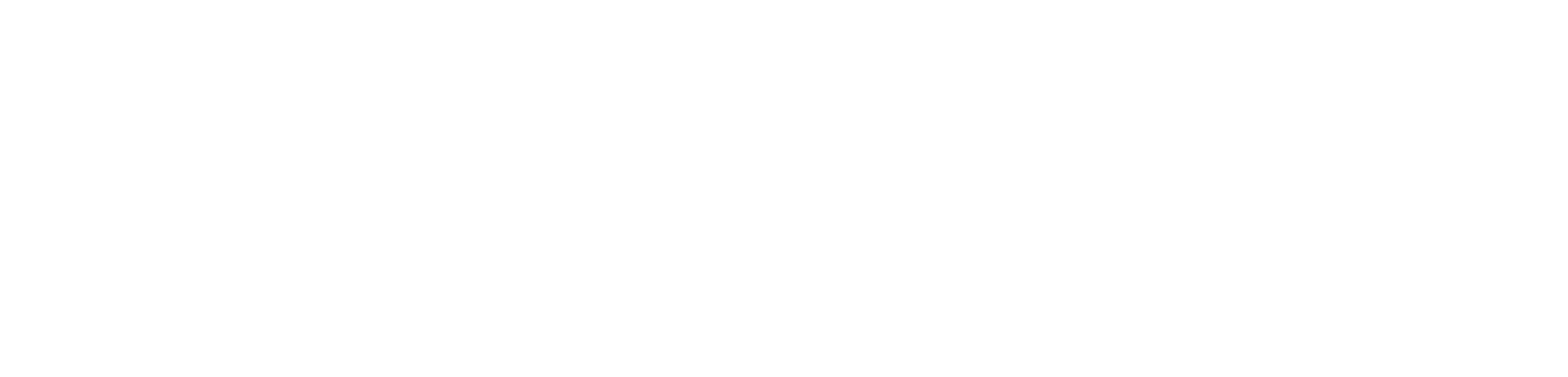
About an hour’s drive west of Chetumal, on the highway toward Escárcega, Kohunlich is a good place to begin. Its signature is the Templo de los Mascarones (Temple of the Masks): a stairway flanked by huge stucco faces, still showing traces of red and black paint, that portray rulers wearing the attributes of the sun god Kinich Ahau. The masks are the reason most people come, but the rest of the city rewards a slow walk: broad plazas, residential groups and pyramids folded into the forest, with the palms closing in overhead.
2. Chacchoben
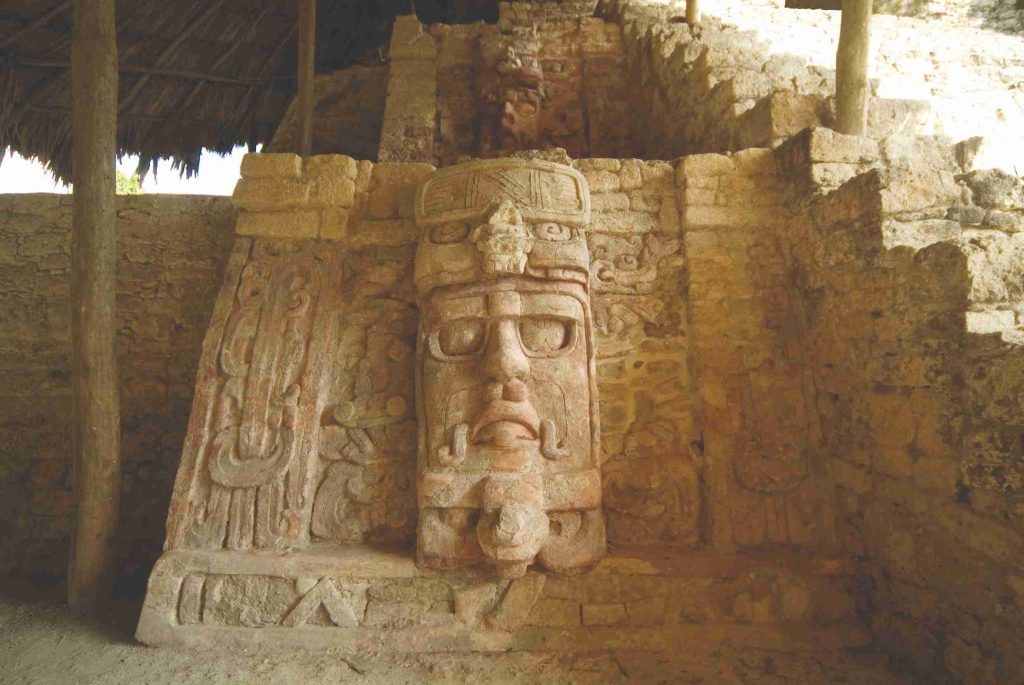
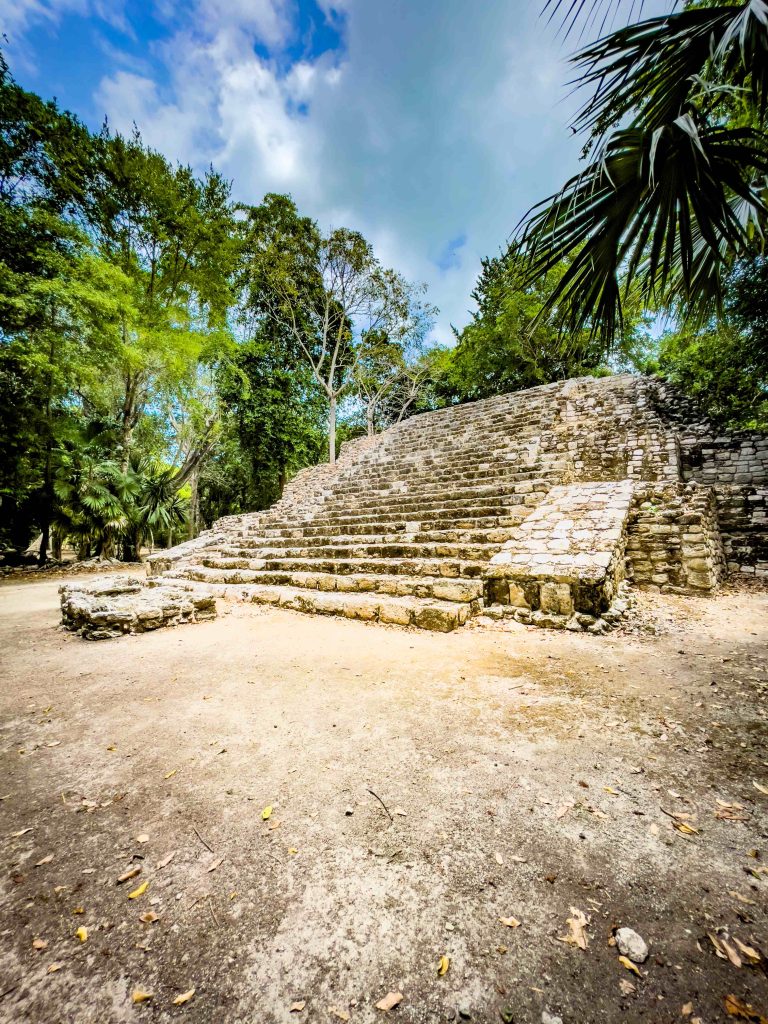
North of Bacalar, about 70 km from Chetumal and 9 km off Highway 307, Chacchoben is one of the largest sites in southern Quintana Roo. It was first settled in the Late Preclassic, more than two thousand years ago, and grew into an important ceremonial center. Today you walk among restored pyramids and plazas, and the highlight is the Gran Basamento, a massive platform that carries two temples on top. A few structures keep patches of their original red paint, now sheltered under roofs.
3. Dzibanché and Kinichná
Further inland, off the same highway that leads to Kohunlich, Dzibanché was a capital in the full sense. Its hieroglyphic texts name the rulers of the Kaan dynasty, the serpent lords who later governed from Calakmul and came to dominate a vast swath of the Maya lowlands; this is where that dynasty had its early seat. Pyramids, plazas and ball courts give a sense of how much power passed through the city during the Classic period. Two kilometers north, Kinichná (“House of the Sun”) is a smaller group built around a single acropolis, a triadic pyramid that dominates the clearing. The two are visited together.

4. Oxtankah
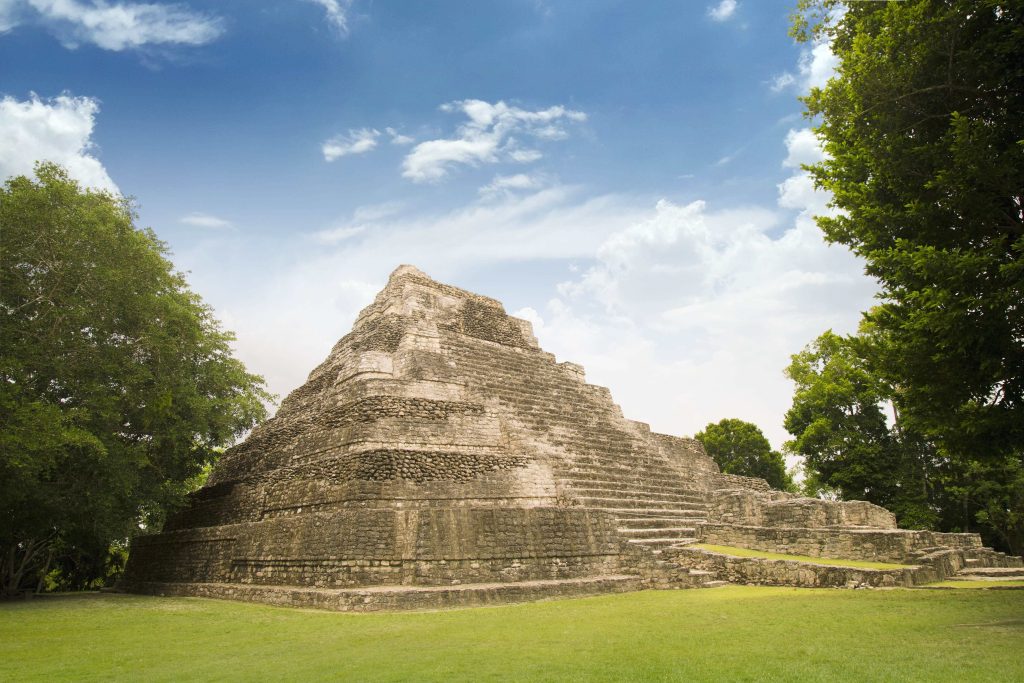
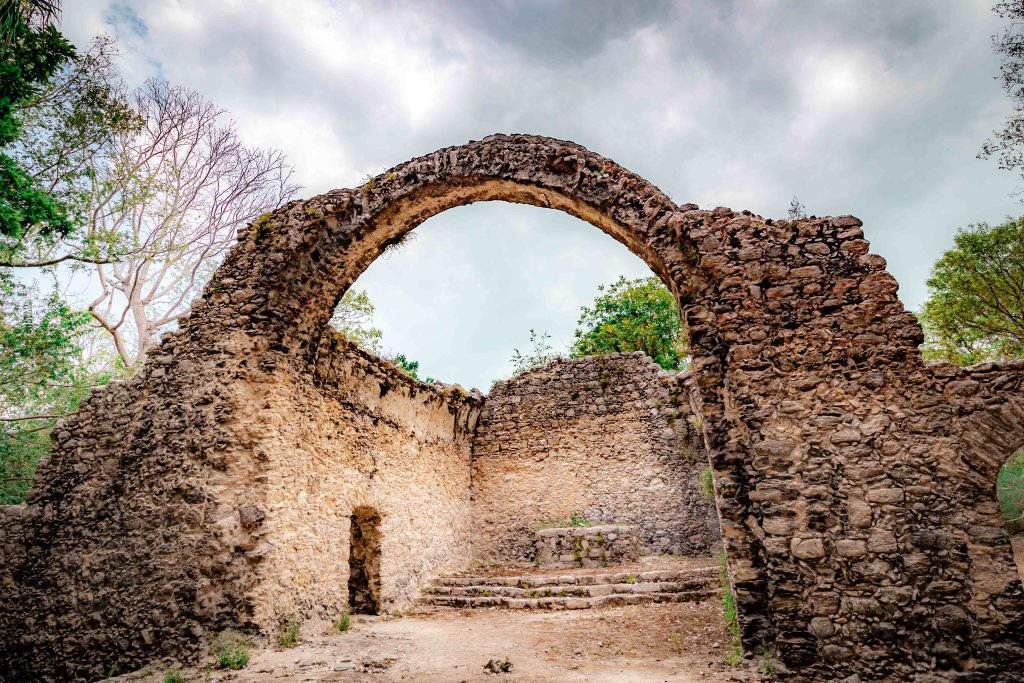
This is the closest site to Chetumal: about 15 km north of the city, past the fishing village of Calderitas, roughly 25 minutes from downtown. Oxtankah was the largest and most important Maya city on Chetumal Bay, a port whose first settlers arrived around 600 B.C. Among its plazas and pyramids stands something you will not see at the other sites: a small open chapel raised by Spanish friars in the 16th century, using stone from the Maya buildings around it.
More than beaches
The Grand Costa Maya is more than its beaches and lagoons. Stand under the masks of Kohunlich, cross the plazas of Chacchoben or walk into the quiet of Dzibanché, and the civilization that built these cities stops being a museum label and becomes a place. Each site opens a different window on that past. Go early, take water, and give yourself more time than you think you need.
Join us on Instagram for travel inspiration and the best of the Mexican Caribbean. Follow us ✨

