
Bacalar is famous for its Lagoon of Seven Colors, but the lagoon itself is fed by a handful of cenotes, and each one has its own character. Cenotes are natural sinkholes filled with fresh water; the ancient Maya held them sacred, and they still draw people in today. Some are calm swimming spots, others drop away to depths that only divers ever see. These are the four you should know before you visit.
1. Cenote Azul: Bacalar's Deep Blue Classic
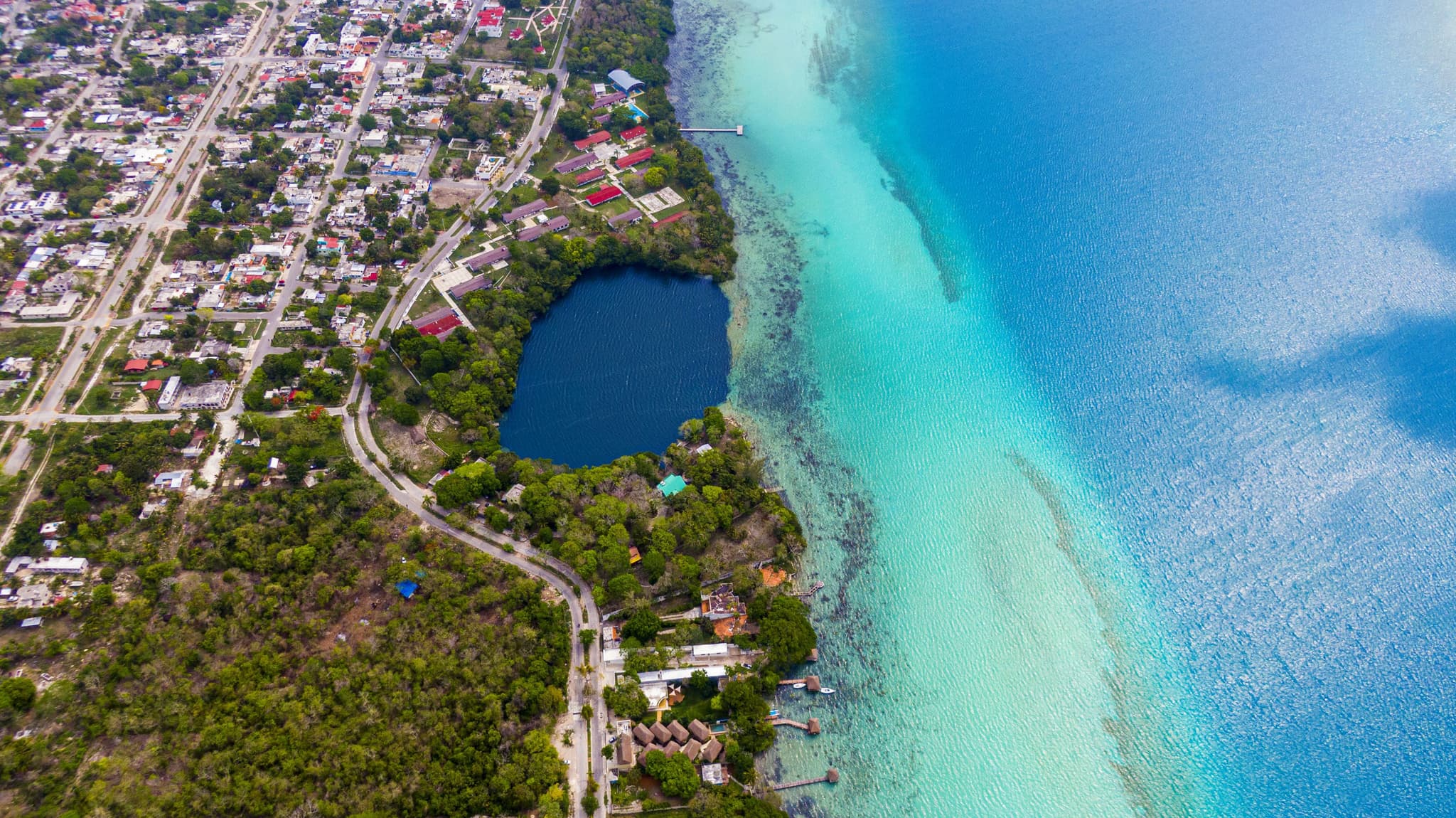
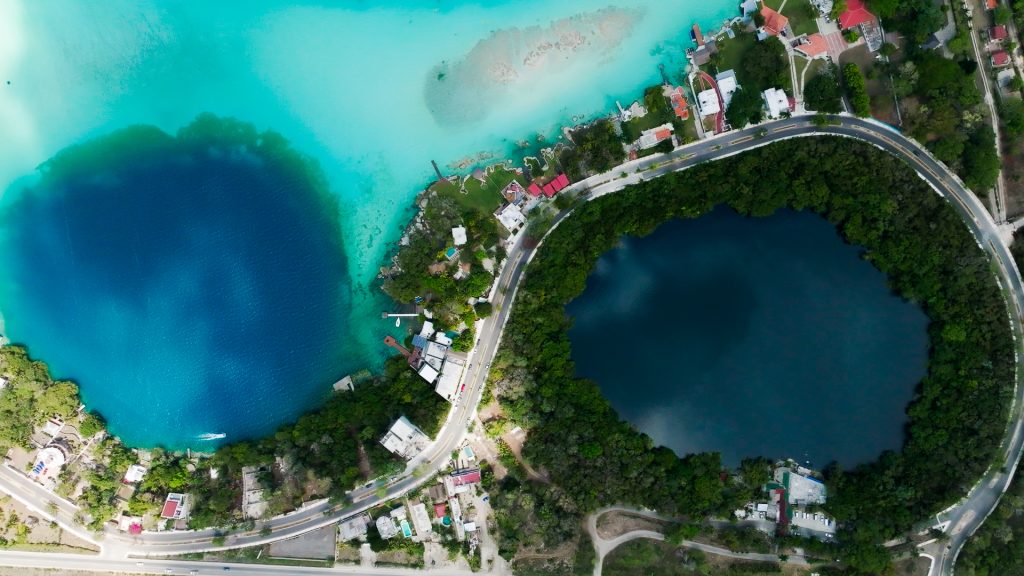
Cenote Azul is probably the best known of Bacalar's cenotes, and it takes one look to understand why. The water is an intense, saturated blue, and it goes down about 90 meters (295 feet), which makes it one of the deepest in the area. Jungle closes in around the rim, so even on a busy day it feels tucked away.
It sits right on the highway at the southern entrance to town, coming from Chetumal, so it makes an easy first stop. You can swim, snorkel or dive here; the water is clear enough to make out the rock walls and the fish that patrol them. There is a restaurant at the entrance for a plate of local food with a view over the water. Entry is charged, and the cenote asks visitors to skip sunscreen and repellent to help keep the water clean.
2. Cenote Cocalitos: Home of the Stromatolites
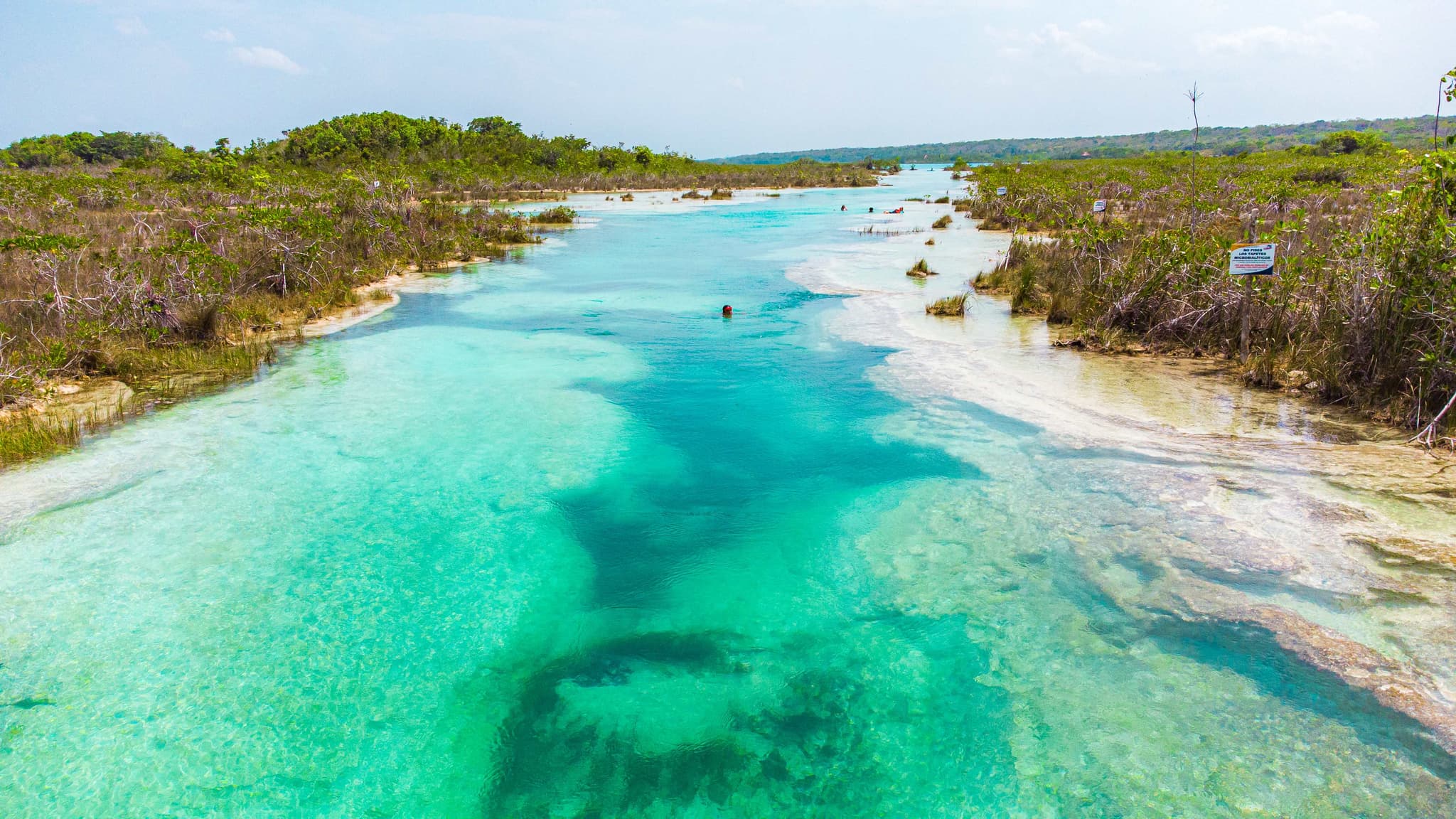
Cocalitos, about 4 kilometers south of town along the lagoon shore, matters for more than its looks. Its shallow water is home to stromatolites, rock-like mounds built up over thousands of years by colonies of microbes. Structures of this kind are among the oldest evidence of life on Earth, and their ancestors helped fill the atmosphere with oxygen billions of years ago. Here they are still alive and still growing.
The water is shallow and warm, with hammocks and swings set right in it, so this is the place to float away an afternoon. Two rules apply, and they are enforced across the whole lagoon: do not touch, step on or sit on the stromatolites, and do not go in the water wearing sunscreen or repellent of any kind, not even biodegradable, because it adds nutrients that upset the lagoon's balance. There is an entrance fee, and it is worth checking opening days before you go.
3. Cenote Negro: The Dark Mystery
Cenote Negro, also called Cenote de la Bruja (the Witch's Cenote), lies just off the western shore, a short way south of town. Its name comes from the water: seen from a boat, the turquoise shallows stop at a sharp line and the lagoon turns almost black, because the bottom falls away to more than 90 meters (about 300 feet), close to 100 by some measurements. That puts it on a par with Cenote Azul among the deepest spots in Bacalar.
Most people reach it by boat, sailboat or kayak from the town's piers, and it is a regular stop on lagoon tours. Divers come for the vertical walls; swimmers come for the odd thrill of floating over the drop-off, with the pale lagoon on one side and that deep blue on the other. A local legend about a healer who lived on its shore gave the cenote its second name.
4. Cenote Esmeralda: The Emerald Gem
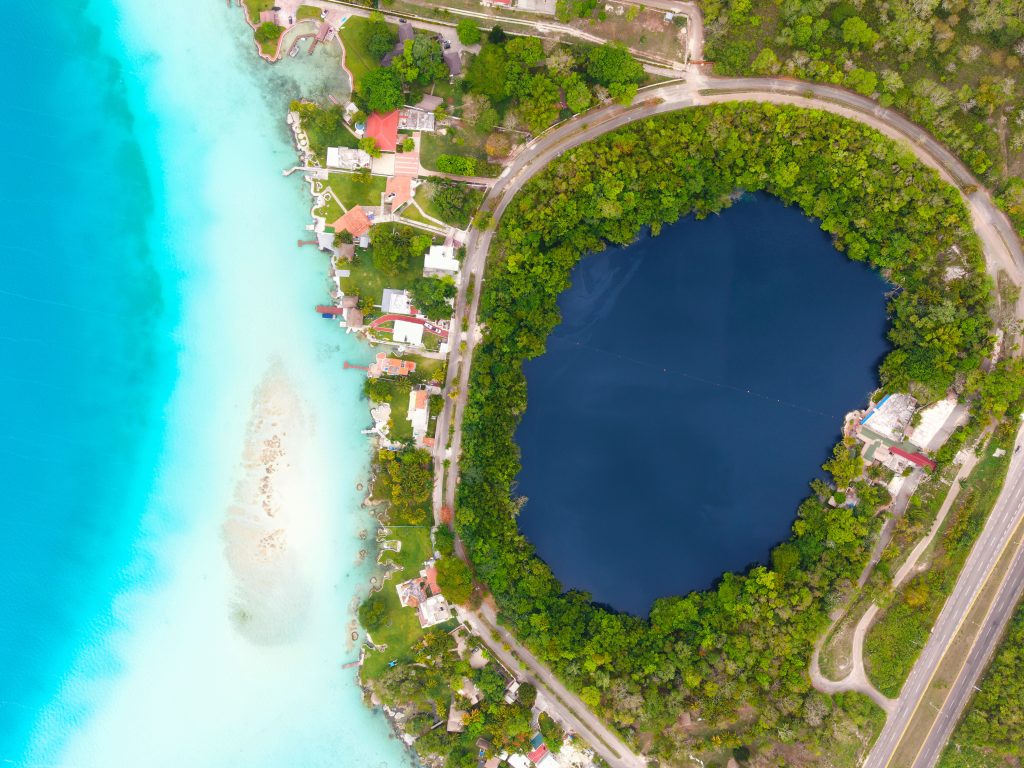
Cenote Esmeralda takes its name from the green and blue tones of its water, a clear break from the turquoise around it. It looks gentle, and near the shore it is: calm, clear water for an easy swim. But it is not a shallow pool. The center reaches around 70 meters (230 feet), and a spring at the bottom feeds fresh water into the lagoon.
It sits on the same western shore, between Cenote Negro and Cocalitos, so it often appears on the same boat or kayak tours, and several lagoon-front hotels and restaurants open straight onto it. It is a good place to slow down: float, watch the color shift, and let the afternoon go.
If you want to know more about Bacalar, take a look at these articles:
You can also visit our Instagram