

Skip to content
Mexican Caribbean
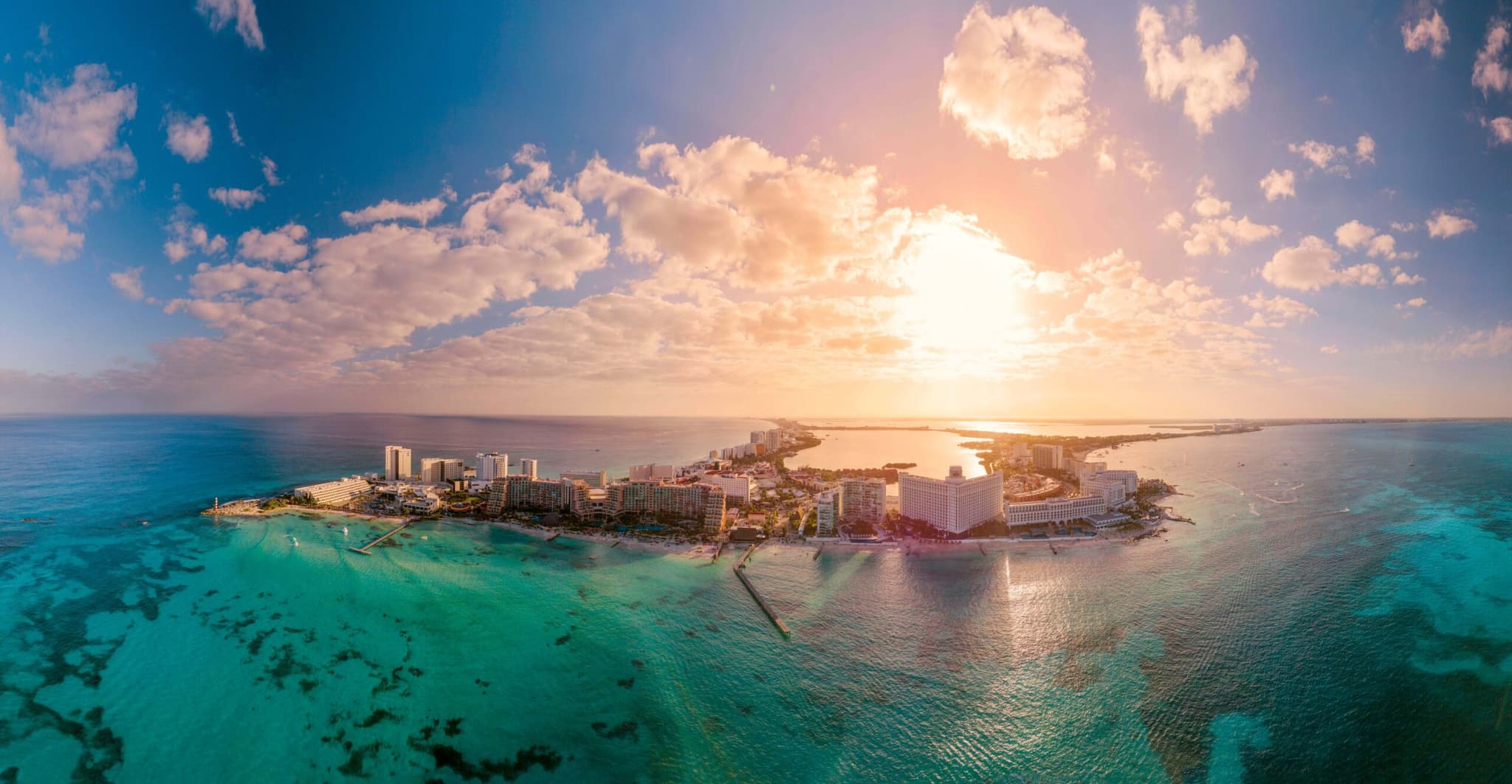
Aerial view of Cancún's Hotel Zone at sunset, with the sun over the sea

Plan your trip

Weather in the Mexican Caribbean

Sunshine nearly all year and warm water in any month: every season has a plan of its own, from Holbox to Chetumal.

Month by month

A sea that never turns cold

In the Mexican Caribbean the water never drops below 75°F (24°C), and afternoons average 82°F (28°C) or more even in January.

Right now

Mexican Caribbean

  • High / Low
  • Sea temperature
  • Rain

October

This month
High
89°
Low
73°
Sea temperature
84°
Rain
9.1 in
Days with rain
15

The Festival of Life and Death

From October 30 to November 2, Xcaret holds its Festival of Life and Death Traditions, with music, altars and a different guest state every year.

Discover the Riviera Maya

1991-2020 averages from the Cancún, Tulum, and Chetumal stations of Mexico’s National Weather Service (SMN). Sea temperature: NOAA OISST, 1991-2020. Today’s weather: Open-Meteo.

The seasons

A Caribbean for every time of year

The warmth lasts all year. What changes is the light, the rain and what is happening in the sea.

Good to know before you go

Rainy season

From May to November it rains more, above all in September and October. Rain tends to come in showers, and the warmth stays.

May to November

Rainy season

From May to November it rains more, above all in September and October. Rain tends to come in showers, and the warmth stays.

The rainy season runs from May to November across the state, and September and October are usually the wettest months. Even then there are sunny days, and the sea is at its warmest.

For a rainy afternoon there are cenotes, museums and local food. Pack a light rain jacket and insect repellent: the state health department recommends it during this season.

Nortes

From October to April, some cold fronts bring wind, clouds and cool evenings for a few days.

October to April

Nortes

From October to April, some cold fronts bring wind, clouds and cool evenings for a few days.

Nortes are cold fronts that come down from the north of the continent. In the Mexican Caribbean they cool the air, especially at night, and bring wind, clouds and swell for a few days.

In strong wind, the Harbor Master may close the port to small boats and, at times, suspend crossings to the islands. If your plans depend on the sea, confirm with your operator the day before and leave a free day in your itinerary.

Sargassum

A seaweed that arrives naturally, mostly from spring to summer. It is not on every beach, or there every day.

Daily alert level from the Mexican Navy

Sargassum

A seaweed that arrives naturally, mostly from spring to summer. It is not on every beach, or there every day.

Sargassum is a seaweed that drifts in from the Atlantic and reaches the Caribbean coast naturally. Its season usually runs from April to October, heaviest between May and August, and it varies a great deal from one year to the next and from one beach to another.

Local authorities clean the beaches, and the Mexican Navy runs barriers and vessels that collect the seaweed at sea before it reaches the shore. Its Oceanographic Institute publishes a daily alert level for each stretch of the coast.

The Bacalar lagoon, the cenotes and the archaeological sites do not depend on the sea, and on the islands the beaches that face west or north usually get less, such as Cozumel's west coast, Playa Norte on Isla Mujeres and Holbox.

Hurricane season

It runs from June 1 to November 30. Storms are forecast days in advance, and the state has protocols for every stage.

June 1 to November 30

Hurricane season

It runs from June 1 to November 30. Storms are forecast days in advance, and the state has protocols for every stage.

The Atlantic hurricane season runs from June 1 to November 30, with the most activity between mid-August and mid-October. The vast majority of days go by as usual, and a storm is tracked days ahead.

Mexico has an early warning system for tropical cyclones that shows, by color, how each storm approaches or moves away, and hotels in the state follow civil protection protocols for their guests.

If you travel during these months, get travel insurance, follow the updates from Quintana Roo Civil Protection and Mexico's National Weather Service, and keep your hotel's contact details at hand.

What to pack

Light clothes, a swimsuit, a hat and a light layer for winter evenings and the air conditioning.

Insect repellent in the rainy season

What to pack

Light clothes, a swimsuit, a hat and a light layer for winter evenings and the air conditioning.

Light, comfortable clothes, a swimsuit, sandals and water shoes. From December to February, a light sweater and long pants for the evenings, especially when a norte passes through.

From May to November, a light rain jacket and insect repellent. And in any month, a hat, sunglasses and a bottle to keep water at hand.

The sun and the sea

The sun is strong all year. In reserves, reefs and cenotes, follow each site's rules on sunscreen.

Stay hydrated and find shade at midday

The sun and the sea

The sun is strong all year. In reserves, reefs and cenotes, follow each site's rules on sunscreen.

In many protected natural areas, reefs and cenotes, sunscreen is banned or must be biodegradable, because it harms the water and marine life. Check each site's rules before you go: a long-sleeved swim shirt protects you from the sun without touching the reef.

Drink water through the day, wear a hat and sunglasses, and find shade during the strongest hours of sun.

Frequently asked questions

When is the best time to visit the Mexican Caribbean?

Every month has its plan. From December to February days are mild and evenings cool; March and April are the months with the least rain; and from May to September the sea is at its warmest and it is whale shark season.

When is the rainy season?

From May to November, and the wettest months are usually September and October. Rain tends to come in showers, with sunny spells in between.

How warm is the sea?

On the Caribbean coast it averages about 79°F (26°C) in winter and close to 84°F (29°C) in August and September. In Holbox, on the north coast, it drops to about 75°F (24°C) in January and February.

Is it cold in winter?

Hardly. Afternoons hover around 84°F (29°C) and nights drop to about 68°F (20°C), a little lower when a norte passes through. A light sweater and long pants are enough.

Is there sargassum all year?

No. It arrives naturally, is usually concentrated between April and October, and varies from one year to the next and from one beach to another. Authorities clean the beaches and contain it at sea, and the Mexican Navy publishes a daily alert level by area. The Bacalar lagoon and the cenotes do not depend on the sea.

Can I travel during hurricane season?

Yes. The season runs from June 1 to November 30, storms are forecast days in advance, and the state has early warnings and hotel protocols in place. Get travel insurance and follow official updates during your stay.