
Endless joy for young travelers
The Mexican Caribbean looks different when you are seven. The water is warm and shallow enough to stand in, the sand holds a castle all afternoon, and there is always another animal to meet. Along the coast of Quintana Roo, parks, beaches and museums have set aside whole areas for younger visitors, usually with lifeguards, life jackets and staff who are used to first-timers.
A kid’s world of play and creativity
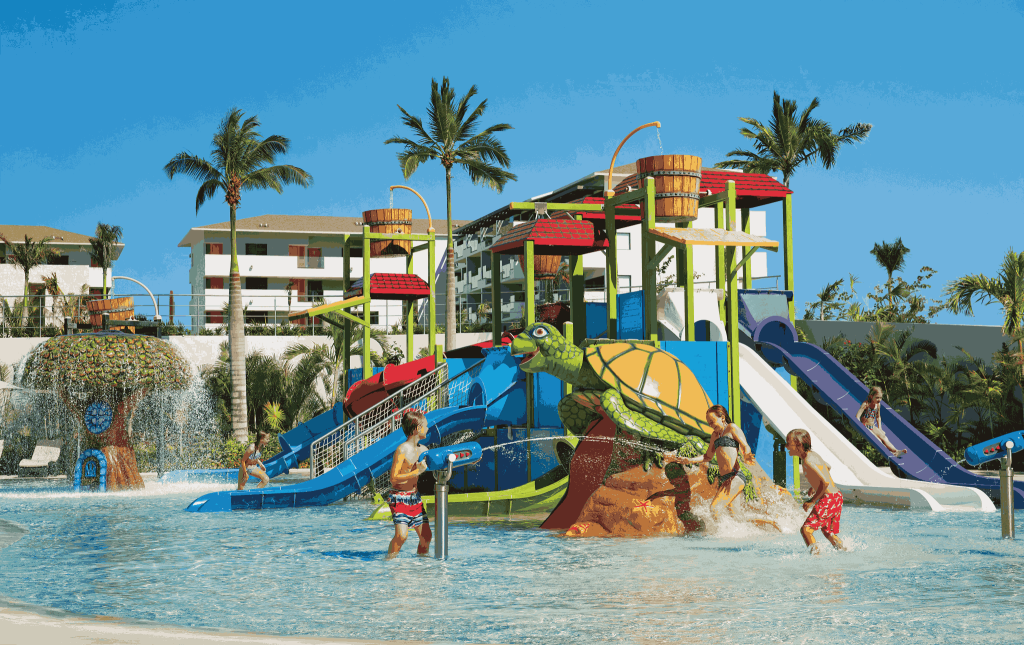
Most resorts on the coast run a kids club: craft workshops, theme nights, sports and a mini disco after dinner, with someone keeping an eye on the little ones while the adults take an hour off. The parks go further. Xcaret sets aside an area called World of Children for under-12s only, and the rules are part of why it works: life jackets on, lifeguards at every body of water, and a shaded spot for parents to sit and watch. Children up to six get their own splash zone and sandbox, away from the bigger ones. Xel-Há keeps a Children’s World of its own, with slides and a wading pool.
The beach asks for less planning: sandcastles, snorkeling in water where a child can still touch the bottom, a paddleboard on the flat morning sea, a first surf lesson when the waves cooperate.
Adventure on land and water
Older children graduate to the adventure parks: water slides, lazy rivers, splash zones and underground rivers you float through in a life jacket and a helmet. At Xplor, next door to Xcaret, the minimum age is five and an adult has to come along the whole way. The zip lines set their own bar, a minimum of 40 kg (88 lb), so the smallest explorers stay with the hand-paddled rafts and the swim through the caves, which tends to be the part they retell at dinner anyway.
Inland, Croco Cun Zoo, at kilometer 31 of the Cancún-Tulum highway in Puerto Morelos, began as a crocodile farm and is now visited only with a guide, on a walk of 60 to 75 minutes that stops so children can touch and feed selected species. Back at Xcaret, an aviary and a butterfly pavilion fill the quieter end of the day, while shows and hands-on workshops open a door onto Maya culture. Nature-focused hotels complete the picture with guided walks, outdoor classes and time set aside for watching birds and butterflies.

Nature, snorkeling and learning
Xel-Há sits at kilometer 240 of the Chetumal-Puerto Juárez highway, some 13 kilometers north of the Tulum ruins, where an underground river runs into the sea. The edges of the inlet are shallow and the fish come close, which makes it a forgiving place to try a mask for the first time, with bright reef fish below and the occasional ray passing underneath.
Cenotes do something similar at a smaller scale, with cool fresh water, rock formations overhead and room to kayak or simply paddle about. For a rainy afternoon or a break from the sun, the Interactive Aquarium Cancún, inside La Isla in the Hotel Zone, is an indoor plan that holds up: more than 140 marine species, an axolotl exhibit and a contact area where a guide stays beside the kids while they touch rays and sea stars. Further south, the Museum of Maya Culture in Chetumal arranges its three levels around a sacred ceiba tree and mixes scale models of Maya cities with multimedia rooms, which is history a nine-year-old will actually follow.

