Exploring the Archaeological Sites of Cozumel
Cozumel, the largest island in the Mexican Caribbean, is known for its turquoise water and its reefs. Less known is how much Maya history it holds. Long before the cruise ships and the dive boats, the island was a trading port and a place of pilgrimage, and several archaeological sites survive in its interior and along its wild eastern coast. In this post we look at the main archaeological sites of Cozumel and what they meant to the Maya.
1. San Gervasio: a sacred Maya site
San Gervasio is the most important and best-studied pre-Hispanic site on Cozumel, and the only one on the island with a ticket office, marked paths and guide services. It sits in the interior, about 7 km east of San Miguel de Cozumel. Spanish chroniclers described Cozumel as a sanctuary of Ixchel, the Maya goddess of childbirth, fertility, medicine and weaving, and San Gervasio has traditionally been identified with that sanctuary. Maya women from the mainland are said to have made the crossing at least once in their lives to leave offerings and ask for her favor.
The site is made up of six architectural groups linked by sacbeob, the raised white-stone roads of the Maya. Most of what you see today was built in the Late Postclassic, between 1200 and 1450. The largest structure is Ka’na Nah, the “tall house”, a stepped platform topped by a two-room temple. Close by, Las Manitas keeps the red handprints that give it its name, and El Arco, the old northern entrance, was restored by the INAH. Walking the paths between the groups is the best way to sense how ceremony, government and daily life fit together here.
2. El Cedral: the island’s oldest settlement
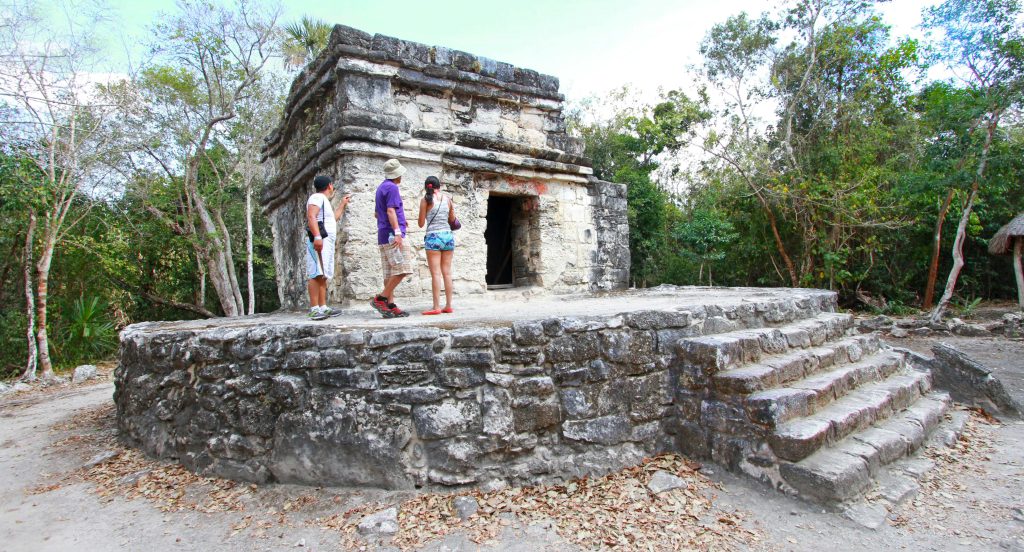
El Cedral, in the south of the island, is considered Cozumel’s oldest settlement. What remains of the Maya village is modest: a small temple in the middle of the modern one. The place matters for another reason too. In 1848, families fleeing the Caste War on the mainland landed here carrying a wooden cross, and El Cedral became the first spot on the island to be resettled.
Their descendants still keep the promise those families made. Every year, from the end of April into the first days of May, the village holds the Fiesta de la Santa Cruz y Feria de El Cedral, with processions, guild offerings (gremios), the traditional vaquería dance, games and a fair. Come at any other time and you find a quiet village where Maya heritage and small-town life mix, a good place to understand the island’s oldest traditions.
3. Castillo Real: a coastal lookout
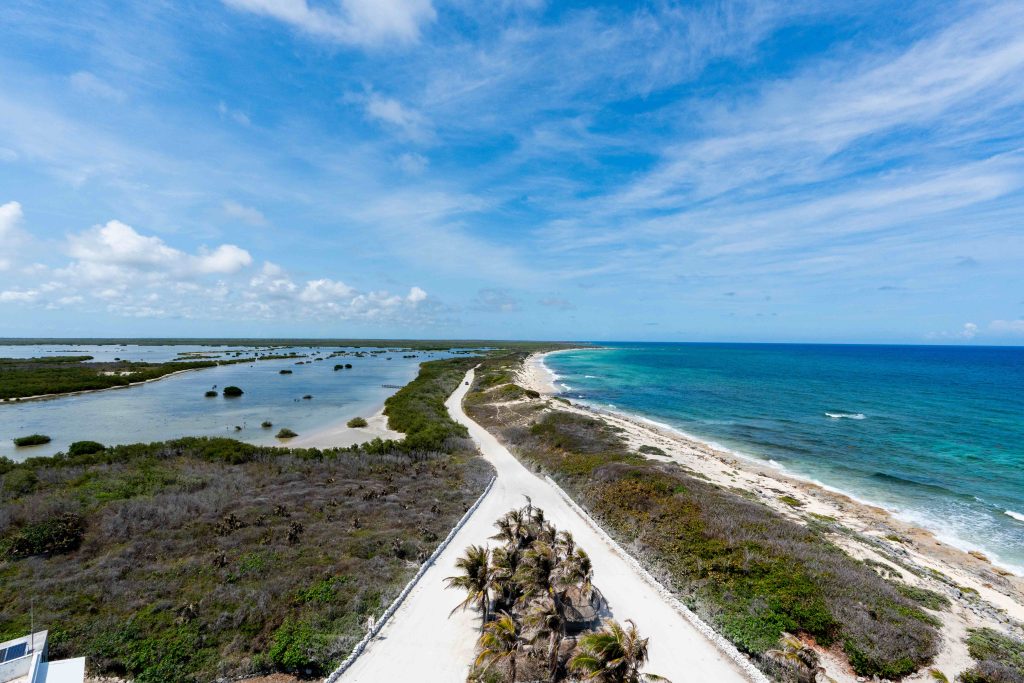
On the eastern side of Cozumel’s north coast, far from the paved roads, Castillo Real is one of the least-visited sites on the island and one of the most evocative. It dates from the Late Classic, roughly 800 to 900 CE. What survives is a watchtower and a pyramidal base topped by a two-chamber temple with a corbel (false) arch, typical of Maya building. Its position facing the sea suggests it served as a lookout over the coast and as a landmark for canoes following the trade routes around the peninsula.
Getting there is part of the experience. You need a 4×4 or an ATV tour along the coast, there are no services, and conditions change with the weather, so ask locally before setting out.
4. The Maya and the sea: archaeological sites of Cozumel
The Maya of Cozumel were farmers and builders, but above all they were sailors and traders. From around 1250 the island flourished as a port on the canoe routes that linked the Yucatán Peninsula with Central America, moving goods such as jade, obsidian and textiles. Its position just off the mainland also made it a natural stop for pilgrims heading to the religious and trading centers of the region.
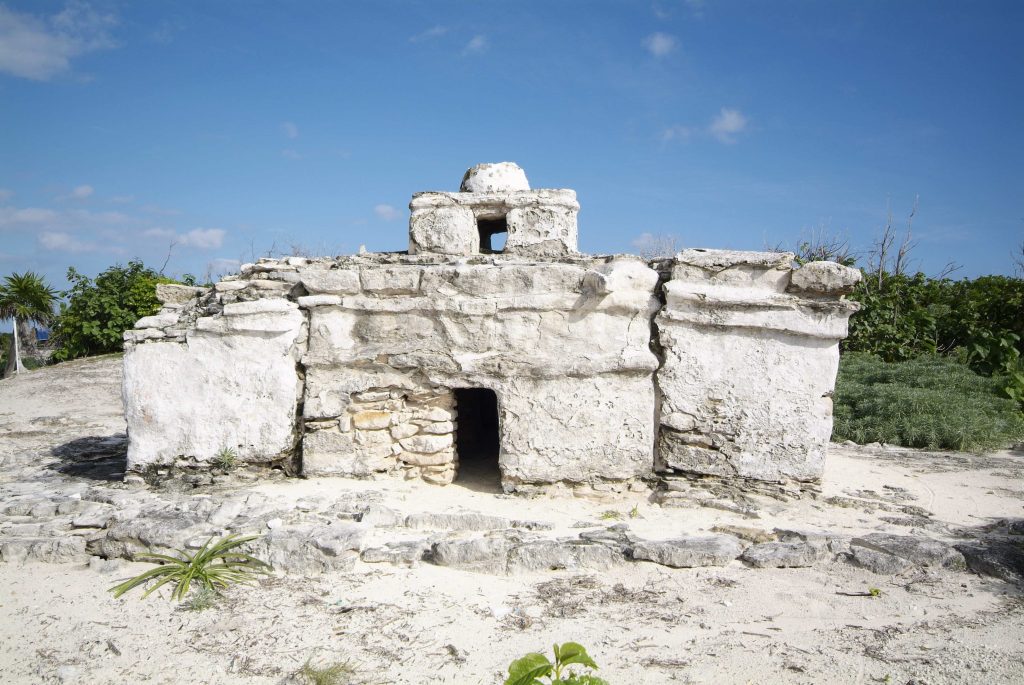
That relationship with the sea is easiest to picture at Punta Sur, on the southern tip. Inside Punta Sur Eco Beach Park stands a small domed structure known as El Caracol. It served as a navigation marker for canoes running the east coast, and the conch shells set into it may have worked as wind-driven sound devices. In late February the sun lines up with the window in its dome, and the park invites the public to watch.
5. Preserving Cozumel’s archaeological heritage
Cozumel is best known for its natural beauty, but its ruins are the key to understanding the island’s history and the part it played in the wider Maya world. The sites are protected by the INAH, and San Gervasio is run together with the Fundación de Parques y Museos de Cozumel (FPMC) and open daily, so it is easy to fit into a day on the island.
Spend a morning among the temples of San Gervasio, make the rough trip out to Castillo Real, or wander through El Cedral, and the island starts to look different. Behind the beaches there is a place where people have lived, traded and prayed for more than a thousand years, and that story is as much a part of Cozumel as the reef.