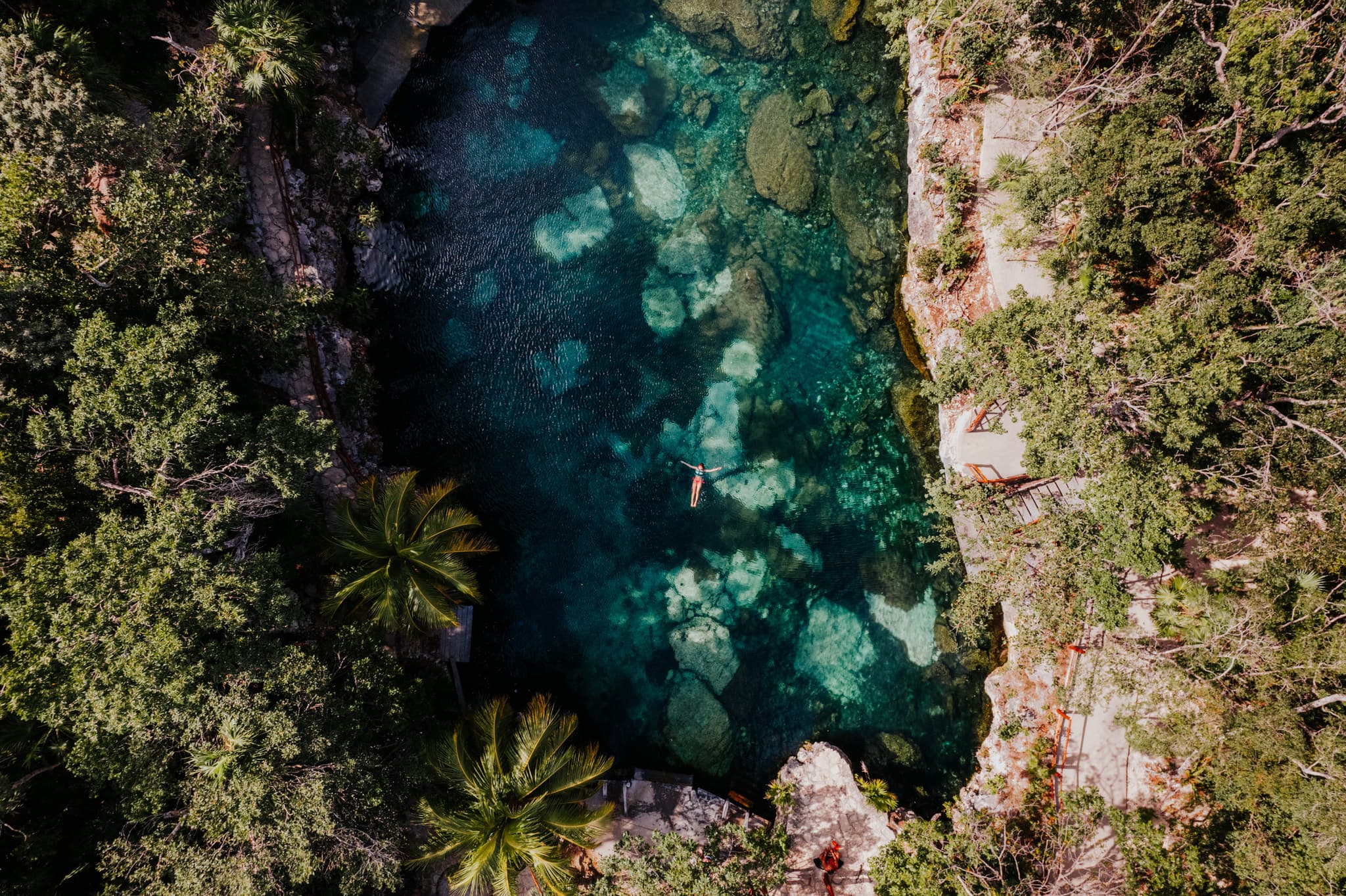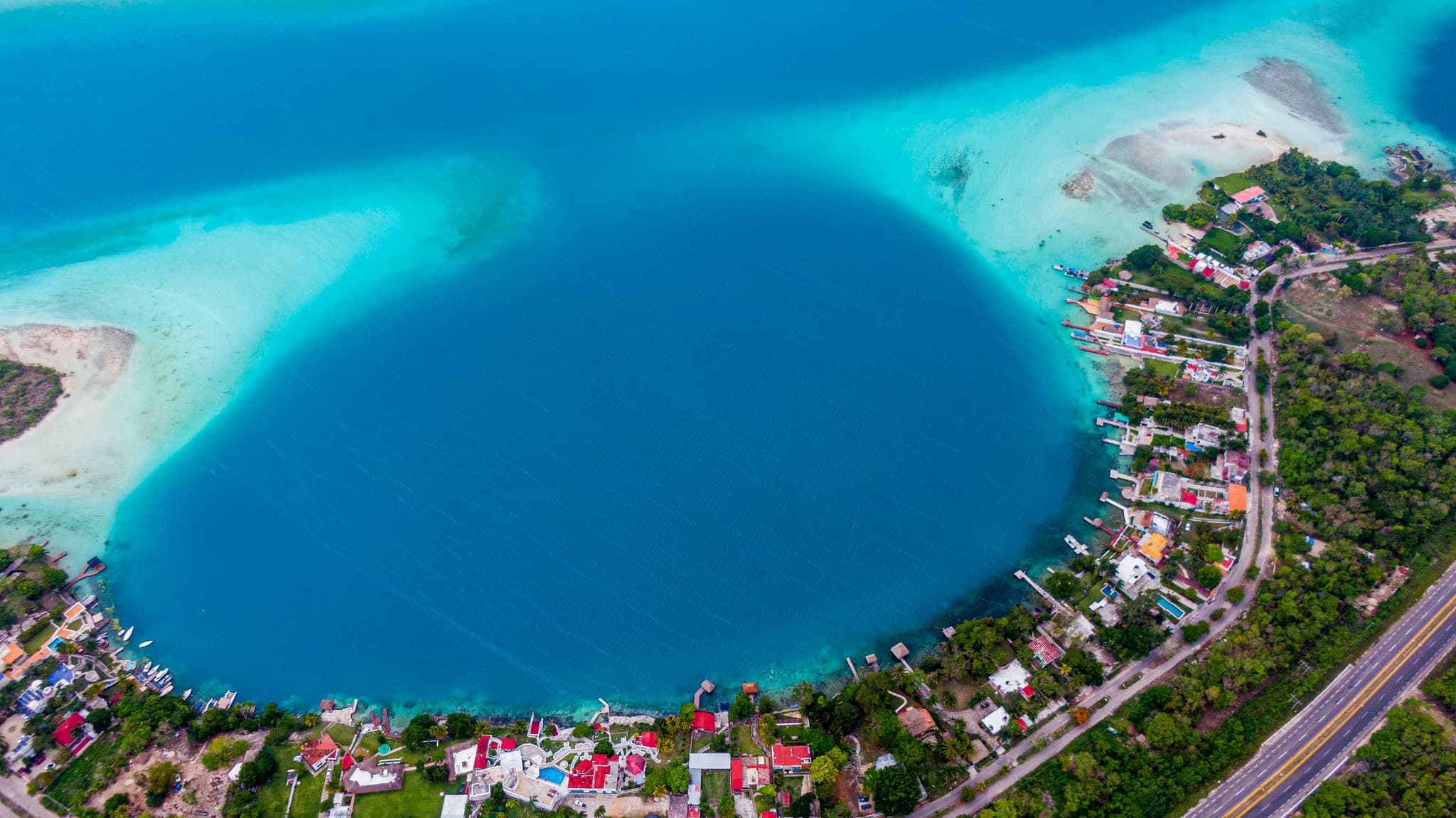

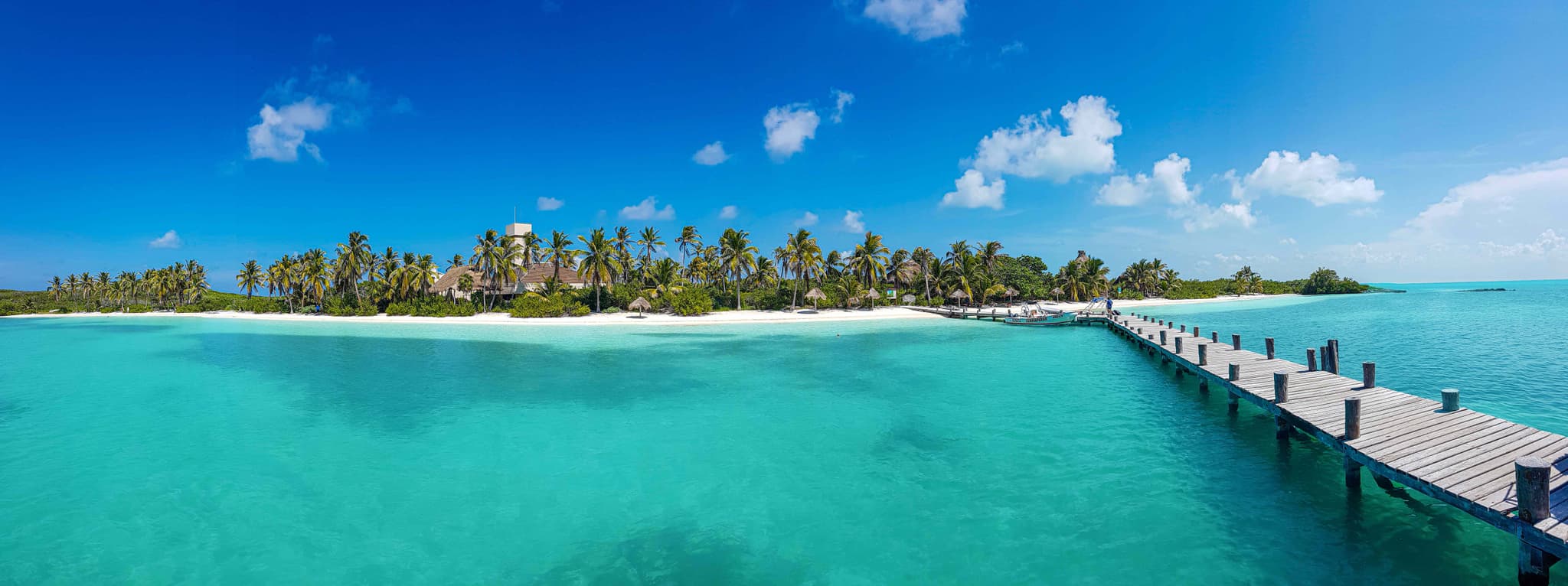
Costa Mujeres, the quiet stretch of coast just north of Cancún, is where you go for the Mexican Caribbean's nature without the crowds. A mangrove lagoon on one side, the open sea on the other, and some of the region's best wildlife within reach of your hotel. If you love being outdoors, these are the experiences worth planning your days around in Costa Mujeres.
1. Yum Balam, a day trip to Holbox
Yum Balam is the big one: around 154,000 hectares of wetlands, mangroves, low jungle and sea surrounding Isla Holbox, decreed a flora and fauna protection area (Área de Protección de Flora y Fauna Yum Balam) in 1994 and listed as a Ramsar wetland. It is not on Costa Mujeres' doorstep, though. Count on about two hours by road to the Chiquilá pier, then a short ferry to Holbox, so treat it as a full day out. Once there, guided boat and kayak tours take you through the mangrove channels and across Laguna Yalahau, where flamingos, herons and pelicans feed. Jaguars and spider monkeys live in the reserve too, although the cats keep well out of sight. Photographers, bring a long lens.
2. Birdwatching on Isla Contoy
Isla Contoy is a national park (Parque Nacional Isla Contoy, decreed in 1998) about 30 km north of Isla Mujeres: 8.75 km of beach, dunes and saltwater lagoons with no hotels and nobody living there beyond the park staff. More than 150 bird species have been recorded on the island. Magnificent frigatebirds nest here in large colonies, brown pelicans and cormorants work the shallows, and flamingos drop in on the lagoons.
Access is strictly controlled. CONANP allows only 200 visitors a day, always with an authorized operator and a guide, and the island receives visitors from 9 a.m. to 6 p.m. Tours leave from the Punta Sam marina, right next to Costa Mujeres, and from Cancún and Isla Mujeres. Most include a snorkel stop at the Ixlaché reef just off the island, so you get the underwater side of the park as well. Book ahead.
3. Snorkeling and diving on the Mesoamerican Reef
The Mesoamerican Reef begins right here, off Isla Contoy, and runs roughly 1,000 km south to Honduras. It is the largest barrier reef in the Western Hemisphere and the second-longest in the world, and Costa Mujeres sits at its northern tip. Whether you snorkel or dive, expect clouds of reef fish, healthy coral heads, sea turtles and, with a bit of luck, a nurse shark resting under a ledge.
Local operators run snorkel and dive trips inside CONANP-protected reef areas, under rules that keep the outing safe for you and for the coral. Visibility is usually excellent, so even from the surface you miss very little of what happens below.
4. Kayaking through the mangroves
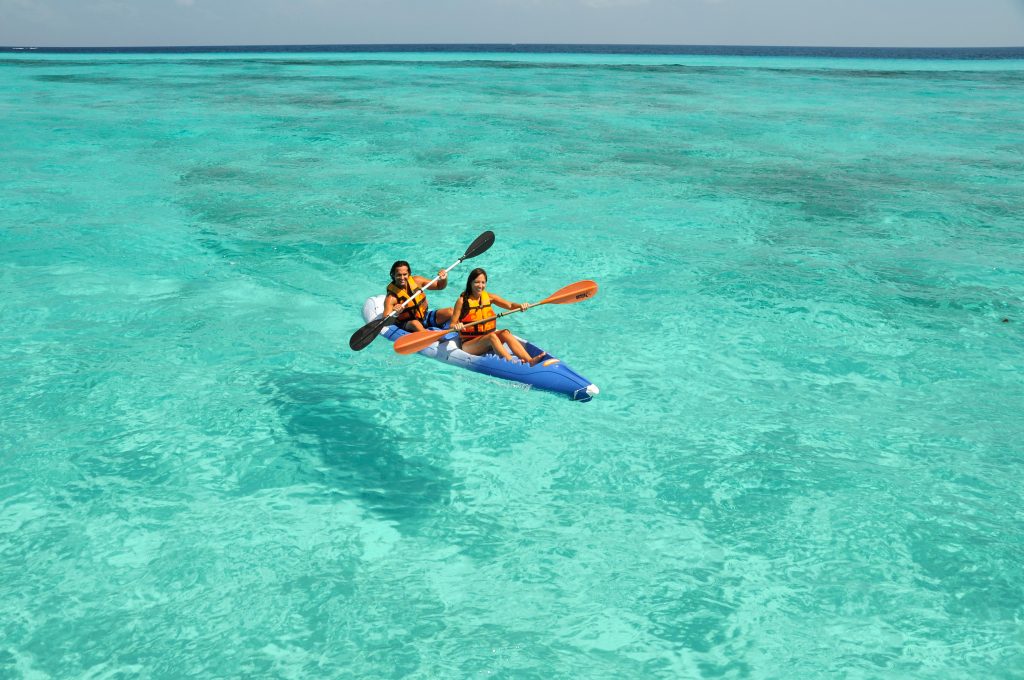
Behind the beaches of Costa Mujeres lies the Chacmuchuch lagoon system, a maze of mangrove channels along Isla Blanca. A kayak is the right way in: no engine, no noise, just calm water and roots on both sides. Mangroves shield the coast from storms and work as a nursery for fish, crabs and birds, so paddle slowly and you will see herons, cormorants and frigatebirds going about their day.
Go with a local guide who knows the channels. The tour is as much about the silence as the wildlife, and it is one of the lowest-impact ways to spend a morning here.
5. Swimming with whale sharks (seasonal)
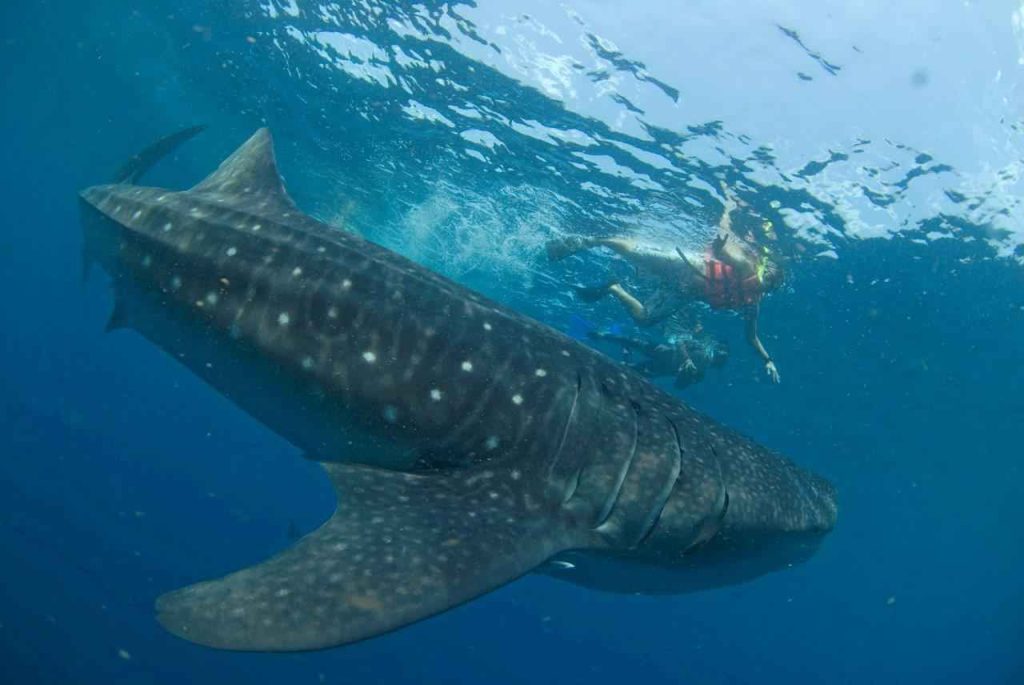
Every year, from mid-May to mid-September, whale sharks gather in the open water northeast of Isla Mujeres and Isla Contoy to feed. This is the largest fish in the world, and the waters off Costa Mujeres are one of the best places on the planet to swim beside one. Numbers peak between late June and August.
The activity is regulated by CONANP: only boats with an official permit, a maximum of ten passengers per boat, no touching and a safe distance from the animal at all times. Tours leave from Isla Mujeres, Cancún and Holbox; book only with an operator that carries the permit. And relax: whale sharks are filter feeders and completely harmless. They glide, you swim alongside for a few minutes, and the guides handle the rest.
6. Sea turtle nesting season
From May to October, the beaches of Costa Mujeres and the rest of the northern coast become nesting grounds for green, loggerhead and hawksbill turtles. The females come ashore at night, dig a nest above the tide line and return to the sea before dawn. Hotels along the coast and local conservation programs run turtle camps that protect the nests and, later in the season, release the hatchlings at dusk. Ask at your hotel, keep the lights off on the beach at night and never approach a nesting turtle.
If your timing is right, you may watch a nest hatch and the tiny turtles scramble to the water. It is the kind of moment that stays with you long after the trip.