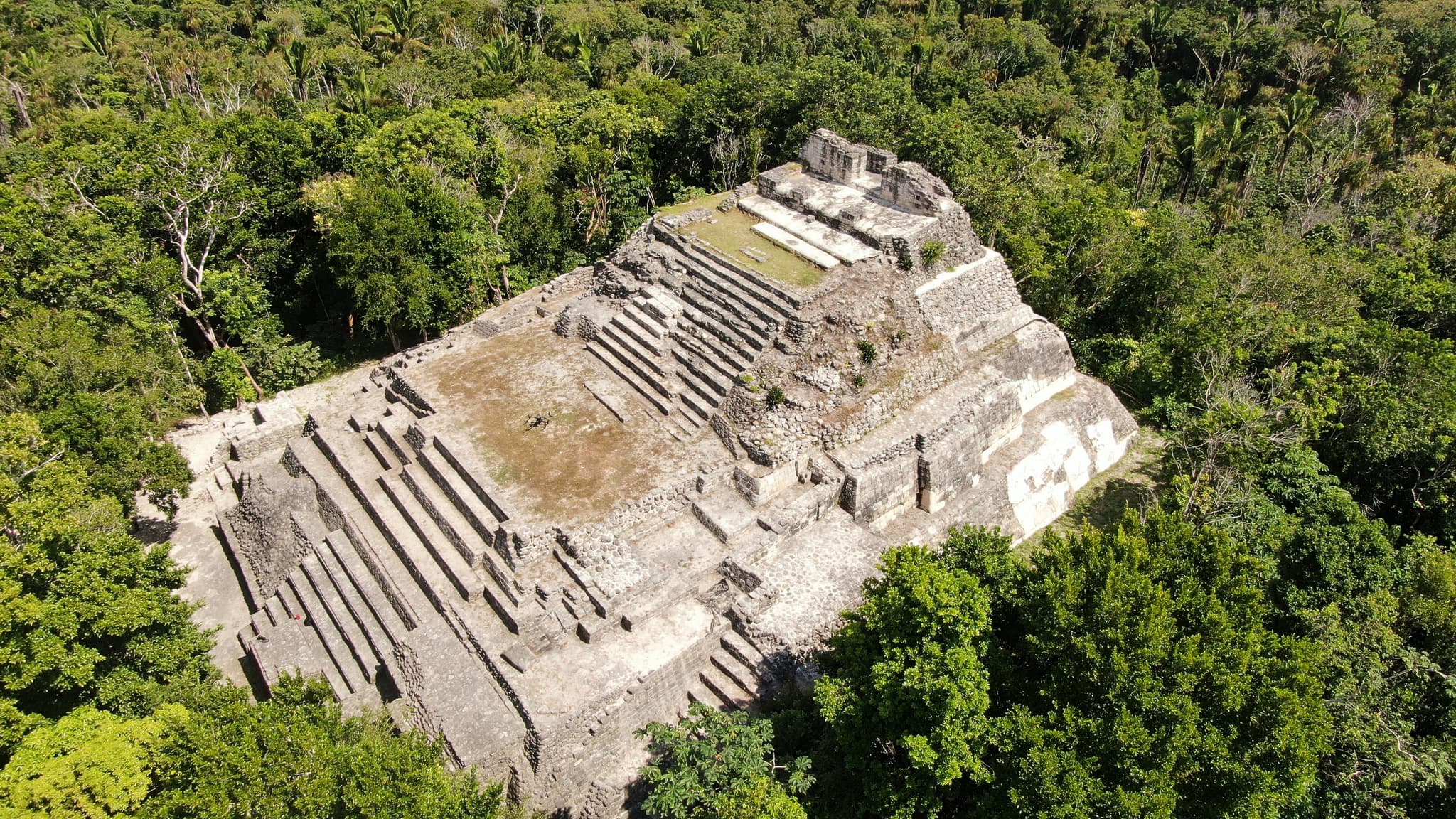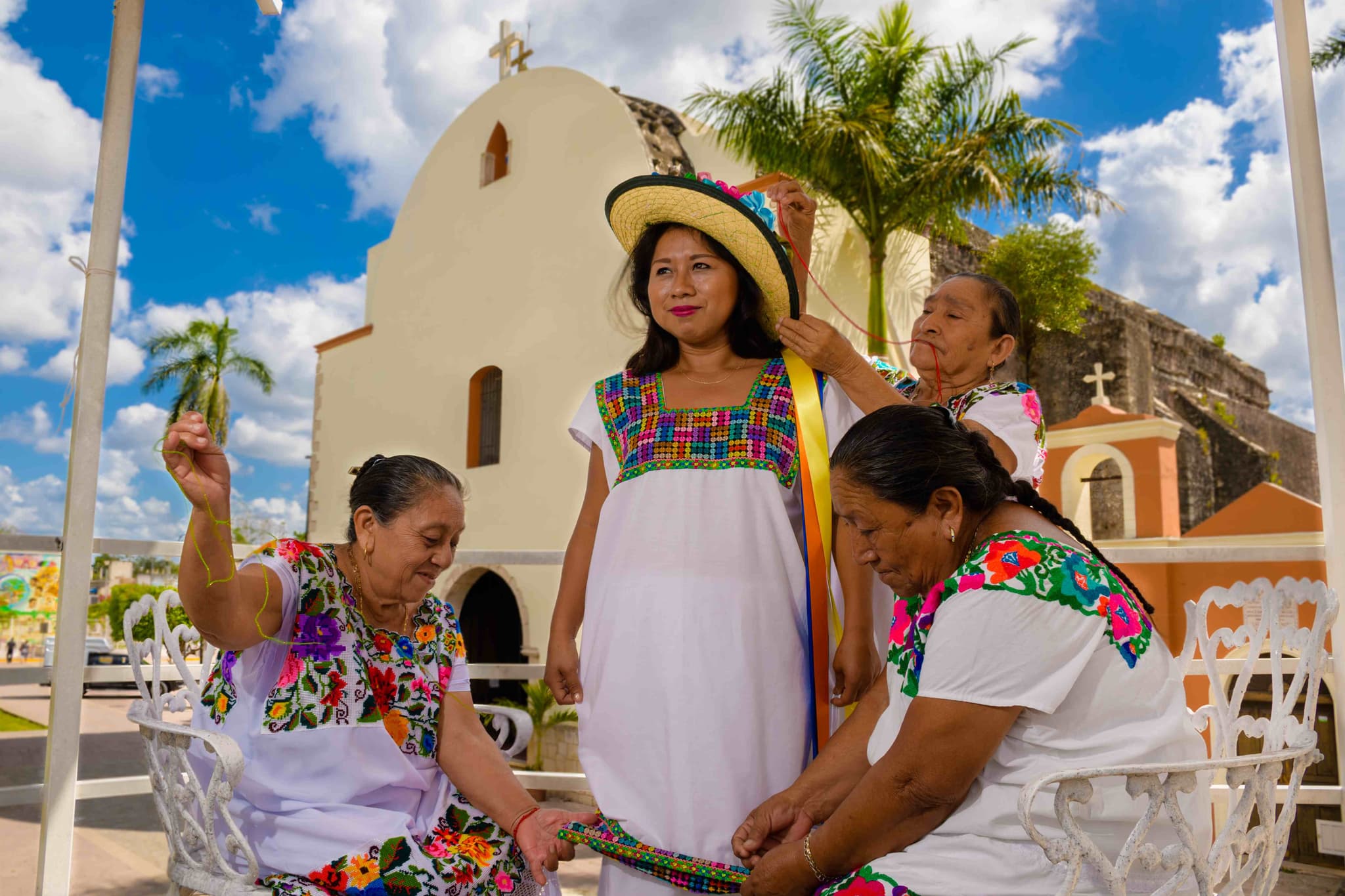

The Mexican Caribbean holds one of the richest concentrations of Maya archaeology anywhere. Walled ports on the cliffs, cities lost in the jungle, temples that still wear their original paint: each site tells a different chapter of a culture that shaped this coast for more than a thousand years. These are nine of the most impressive archaeological sites in the destination.
Tulum
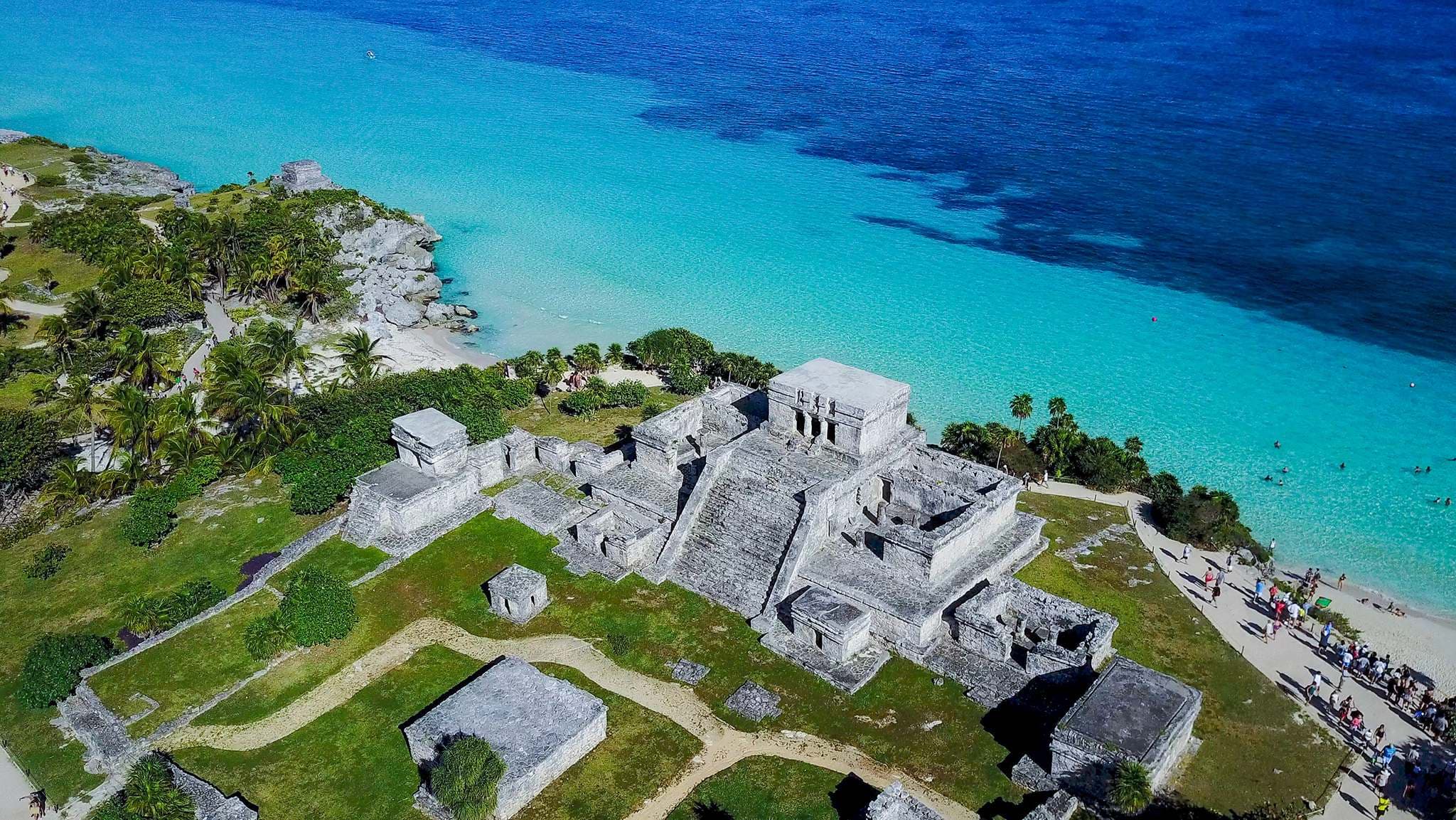
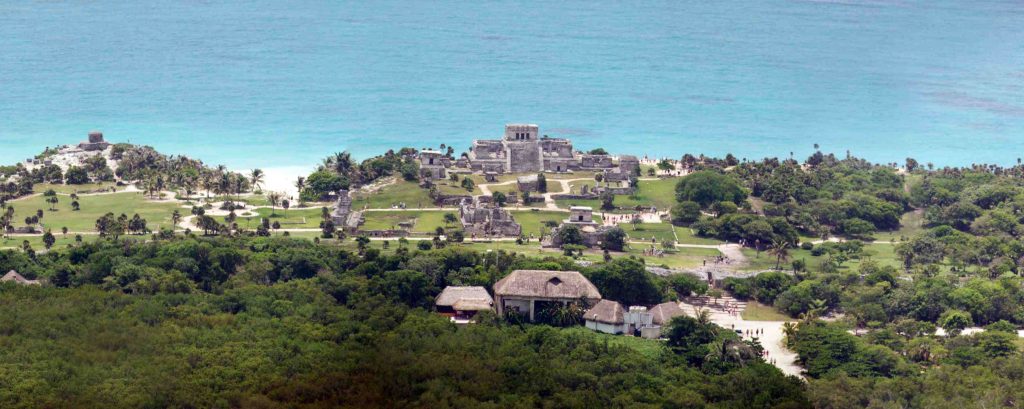
Tulum sits right on the edge of the Caribbean Sea, and it is the most visited archaeological site in the Mexican Caribbean (INAH ranks it third in the whole country). This walled city was a busy Maya trading port. Its landmark, El Castillo, stands on the cliff above a small beach, and the Temple of the Frescoes keeps murals of supernatural beings from the underworld that rank among the most important examples of Maya wall painting still in existence. Visitors now enter through Parque del Jaguar, the protected area that surrounds the site. Access rules and fees change often, so check before you go.
Cobá
About 47 km northwest of Tulum, some 45 minutes by road, Cobá lies deep in the jungle. In the Classic period this was one of the most powerful cities in the region: more than 6,000 structures have been recorded, linked by a network of sacbés, the raised white roads of the Maya, the longest of which runs about 100 km west to Yaxuná. The reason most people come is Nohoch Mul, a 42-meter pyramid and the tallest pre-Hispanic structure in the northern Maya area. After six years closed, the climb reopened in December 2025 over a new wooden staircase, and the view across the canopy is still one of the great moments of any trip here.

El Rey
In the middle of Cancún's Hotel Zone, across the boulevard from Playa Delfines, El Rey is one of the city's most important archaeological sites, with around 47 visible structures set along a causeway and two small plazas. In the Late Postclassic (1200–1550 AD) it lived off maritime trade and fishing. The site reopened in July 2025 with renovated visitor facilities, and it remains the easiest way to see Maya architecture without leaving the city.
San Miguelito
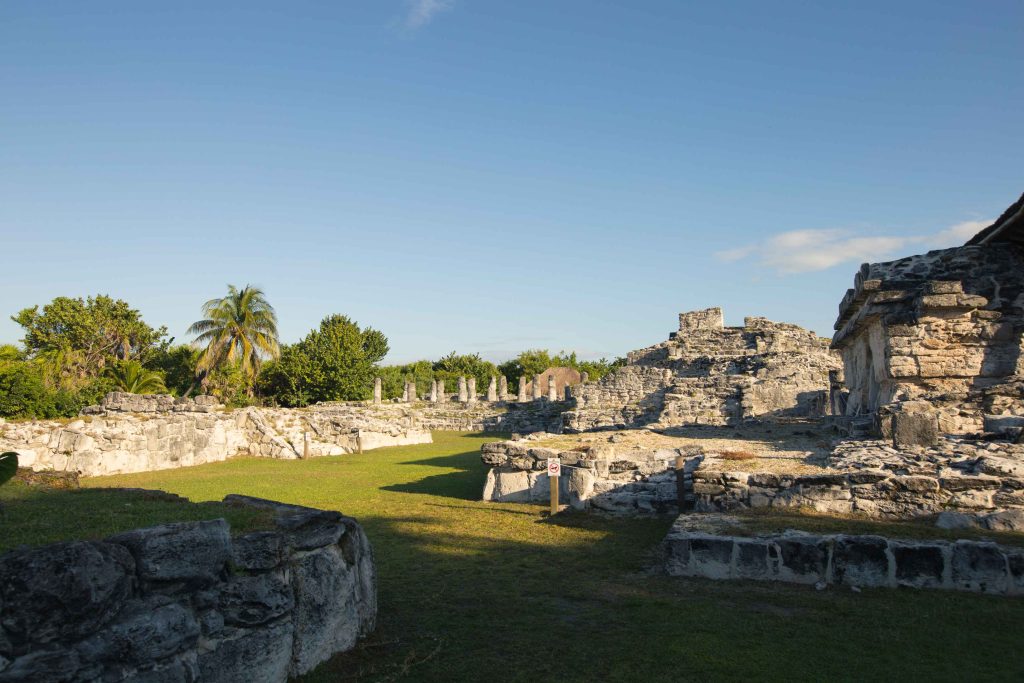
A few minutes up the boulevard, on the grounds of the Museo Maya de Cancún, San Miguelito is a quiet corner among the hotels. Its buildings date from the Late Postclassic (roughly 1200 to 1550 AD), and INAH believes it formed a single settlement with El Rey, one that lived from the sea: fishing, and the coastal trade in salt, honey, copal and cotton.
El Meco
North of Cancún, on the Costa Mujeres shore facing Isla Mujeres, El Meco is small but rewarding. Known to the Maya as Beel'ma, it was a port on the sea route that linked this coast with Tulum, Muyil and Cobá, and it traded as far as present-day Belize, Honduras and Guatemala. Its pyramid, El Castillo, reaches 12.5 meters, the tallest on the northern coast of Quintana Roo. The site reopened in December 2024 after INAH's improvement works.
San Gervasio
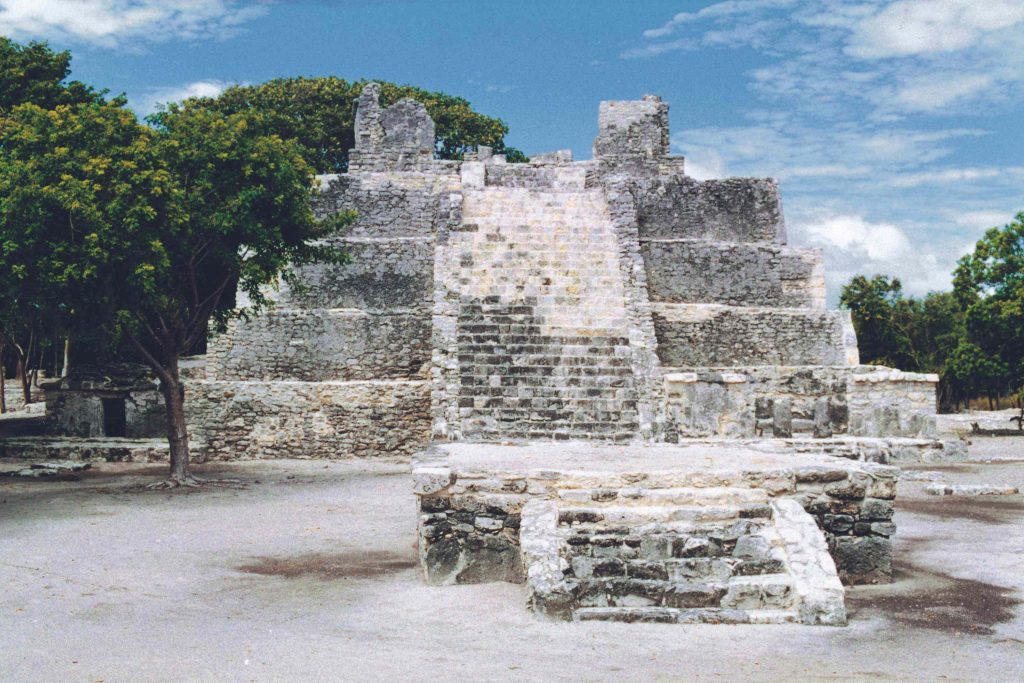
Cozumel, the largest island in the Mexican Caribbean, is known for its reefs and beaches, but it also holds one of the region's most significant sites. San Gervasio was a sanctuary of Ixchel, goddess of the moon, fertility and medicine, and pilgrims crossed from the mainland to leave their offerings here. Most of the buildings you see today date from the Late Postclassic, when San Gervasio ruled a network of smaller communities across the island and served as a trade link between the Maya cities of the coast.
Muyil
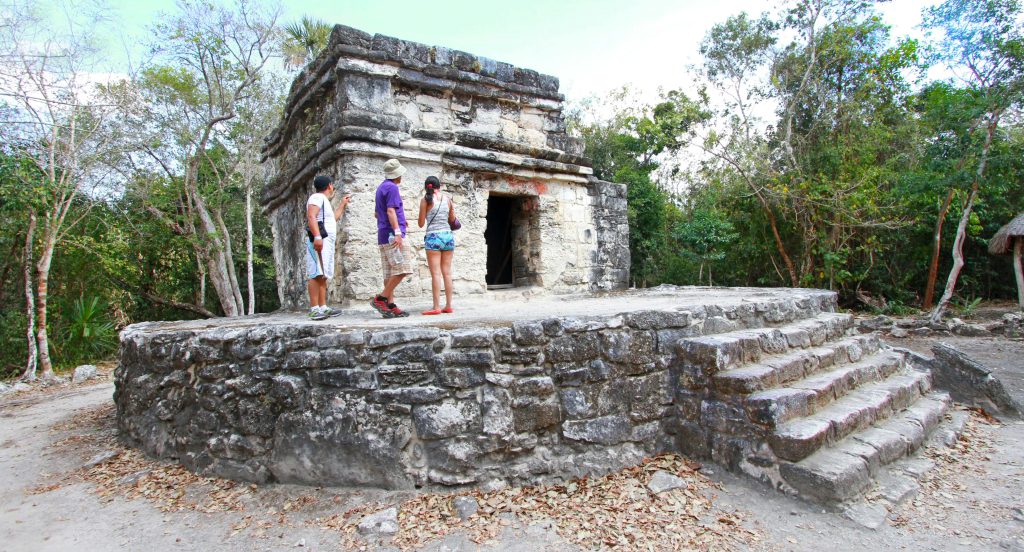
Some 25 km south of Tulum on Highway 307, about 20 minutes by car, Muyil lies within the Sian Ka'an Biosphere Reserve. It is one of the longest-occupied Maya settlements in the region, inhabited for close to two thousand years from around 350 BC. El Castillo, 17 meters high with a small turret on top, rises over the jungle in the Petén style of the great southern cities, and the lagoon canals beyond it once carried trade out to the sea. After two and a half years of restoration work, the site reopened in February 2026 with two more groups of buildings open to visitors.
Kohunlich
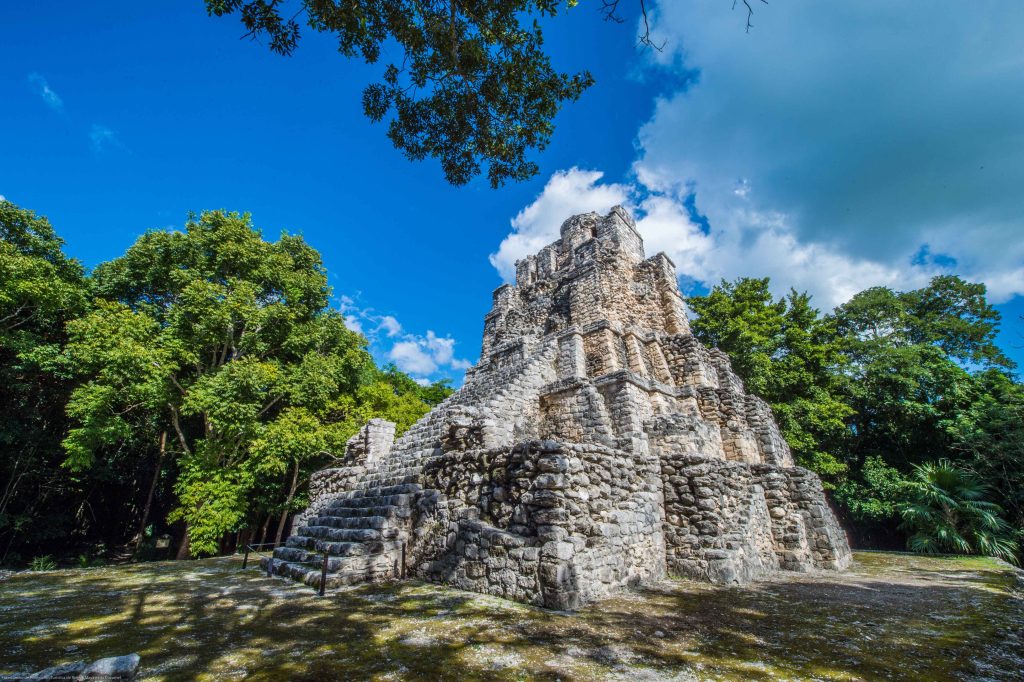
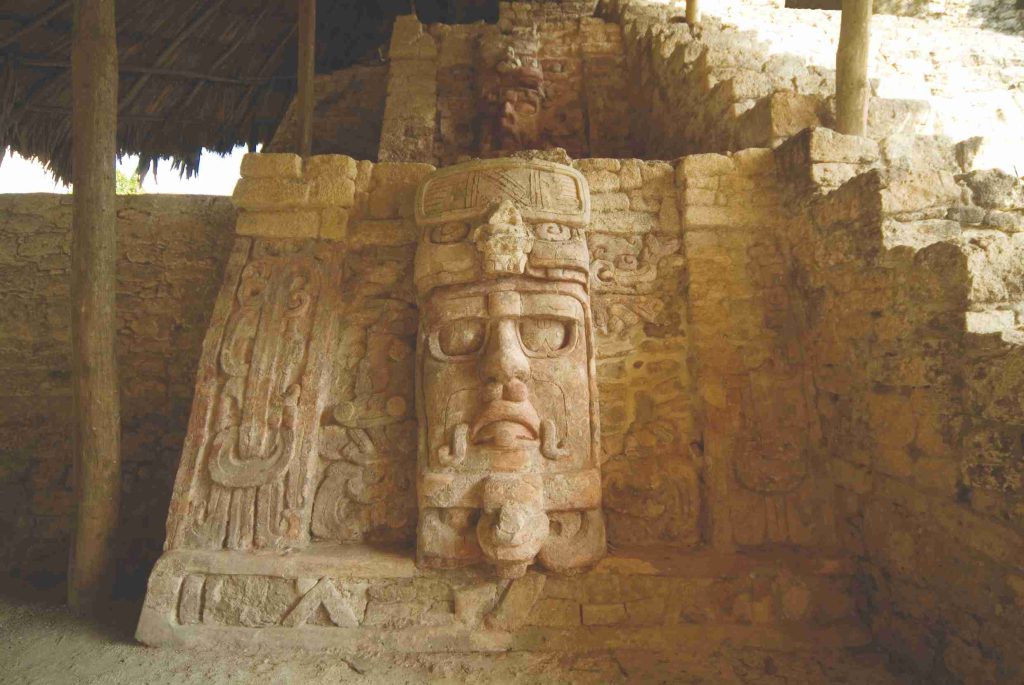
In the south of the state, 65 km from Chetumal in the Grand Costa Maya region, Kohunlich is best known for the Temple of the Masks (Templo de los Mascarones): a row of large stucco faces, still showing their red and black paint, that portray rulers with the attributes of Kinich, the sun god. Around them spread wide plazas, residential compounds and monumental buildings from a city that peaked between 600 and 900 AD. The site reopened in January 2025 with new visitor facilities.
Dzibanché
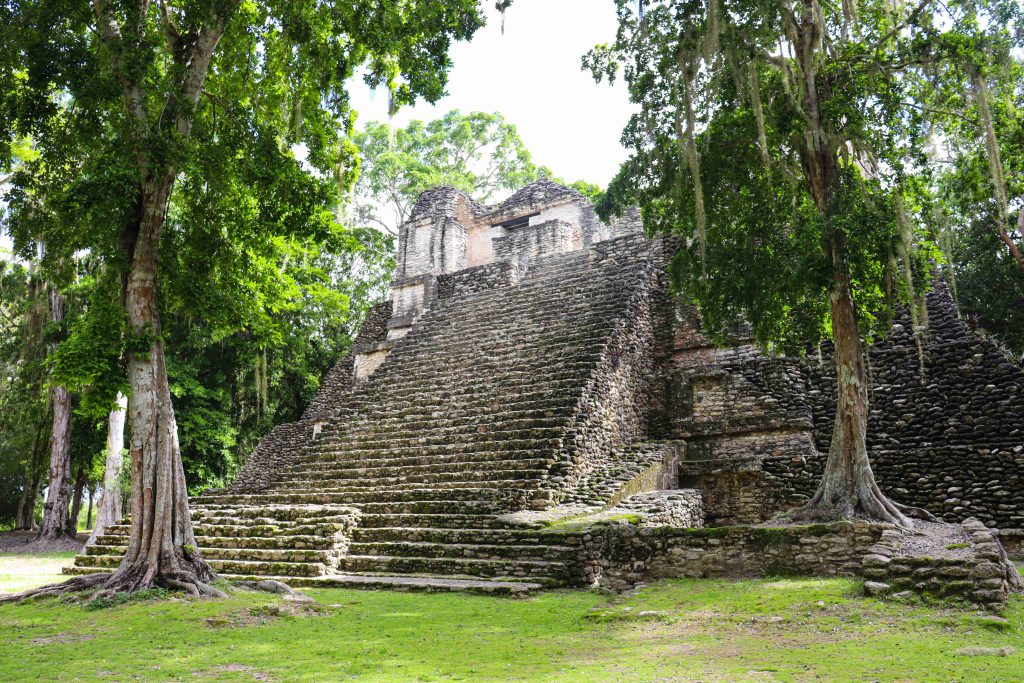
Also in the Grand Costa Maya, Dzibanché was one of the largest and most powerful cities of southern Quintana Roo. Between roughly 250 and 650 AD it was the seat of the Kaanu'l, the "snake" dynasty that went on to dominate much of the Maya lowlands. Four groups of Petén-style buildings survive. The best known is the Temple of the Captives, whose hieroglyphic staircase shows bound prisoners with their names and a date equivalent to 495 AD. New stucco facades linked to the dynasty were uncovered in 2024, and the site reopened in February 2025.
Each of these sites is a different way into the Maya world: a port on a cliff, a sanctuary on an island, a dynasty's capital in the jungle. Together they are one of the best reasons to look beyond the beach.
If you want to know more archaeological sites, here are two more articles:
You can also visit our Instagram