
Isla Mujeres is famous for its beaches and turquoise water, but the island also carries a long history tied to the ancient Maya. Small as it is, it holds remains that link today's visitors with the people who lived, prayed and traded here centuries ago. In this article we take you through the main archaeological sites of Isla Mujeres: a clifftop temple, a city on the mainland and a museum under the sea, with the myths and history behind each one.
1. Temple of Ixchel at Punta Sur
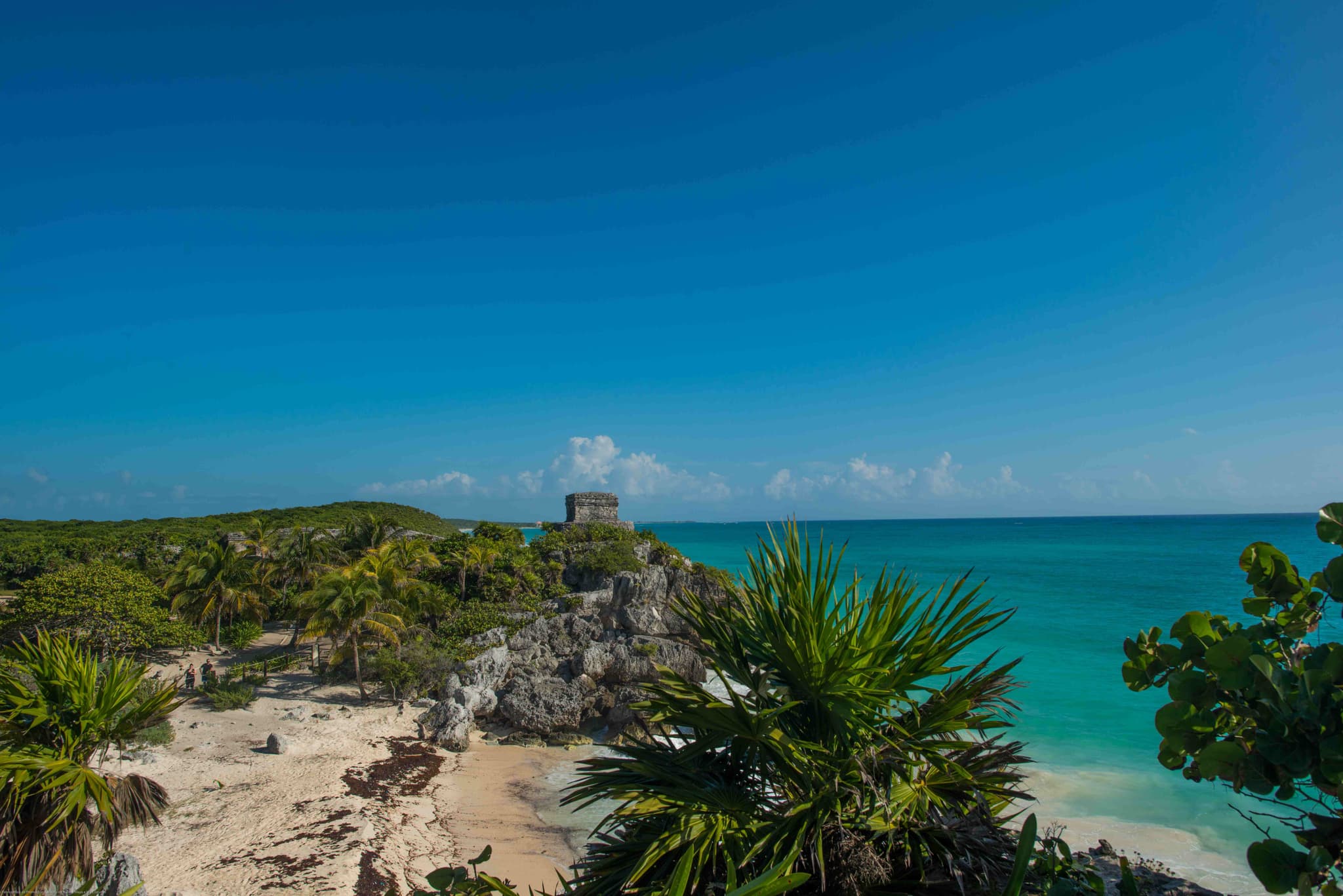
The best-known archaeological site on Isla Mujeres is the Temple of Ixchel at Punta Sur, the southern tip of the island and the easternmost point of Mexico. It is a small structure, but its meaning is large. It was built in honor of Ixchel, the Maya goddess of fertility, love and medicine, often identified with the moon. The Maya saw her as the protector of women, and many believe the island owes its name to that link: when the Spanish landed in the 16th century they found figurines of the goddess along the shore and called the place Isla Mujeres, the island of women.
History of the temple
The temple dates from the pre-Hispanic period and is thought to have been a place of pilgrimage for Maya women, who crossed from the mainland to leave their offerings. Time and weather have taken their toll, and Hurricane Gilbert in 1988 destroyed most of what was still standing, but you can still make out the foundations and part of the original walls. What has not changed is the setting: a rocky headland with the Caribbean on three sides.
What to see
Beyond the ruins, Punta Sur has an outdoor sculpture park with contemporary pieces along the cliff path. The landscape does the rest: rock walls dropping into the sea, the sound of the waves, and very few people early in the day. If you can, come at sunrise. This is where the first light of the day touches Mexican soil.
2. El Meco: Maya vestiges on the way to Isla Mujeres
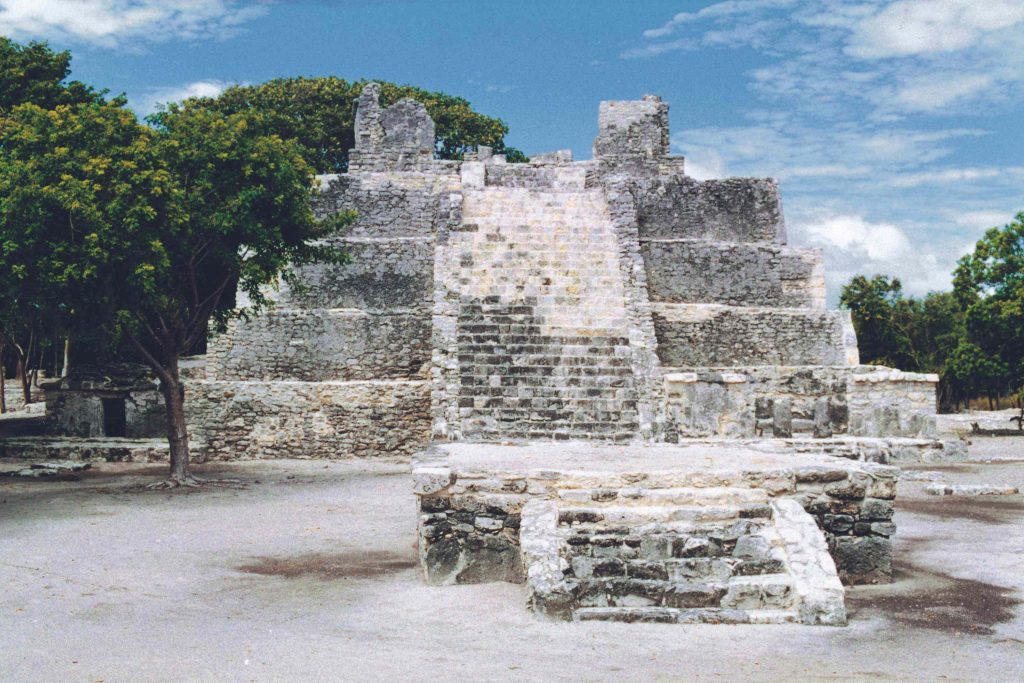
El Meco is not on the island itself, but it does belong to the municipality of Isla Mujeres. It sits on the mainland at kilometer 2.7 of the Puerto Juárez-Punta Sam road, between the two ferry terminals that serve the island and about 8 km north of downtown Cancún. It is one of the most important sites in the Cancún area and an easy stop before or after the crossing.
History of El Meco
El Meco was first occupied in the Early Classic period, roughly between 250 and 600 AD, as a fishing village linked to Cobá. It was then abandoned for several centuries and resettled around 1000 to 1100 AD. Its heyday came in the Postclassic, between 1200 and 1500, when it grew into a trading and navigation hub on the maritime routes along the coast.
What to see
Several structures survive, but the one that draws the eye is El Castillo, a five-tiered pyramid 12.5 meters high, the tallest Maya building on the east coast of Quintana Roo. From the top, the Maya could watch the sea and the canoe routes coming in from the Caribbean. Today the site is quiet and rarely crowded, so you can walk among the ruins and look at the architecture up close.
3. MUSA, an underwater museum
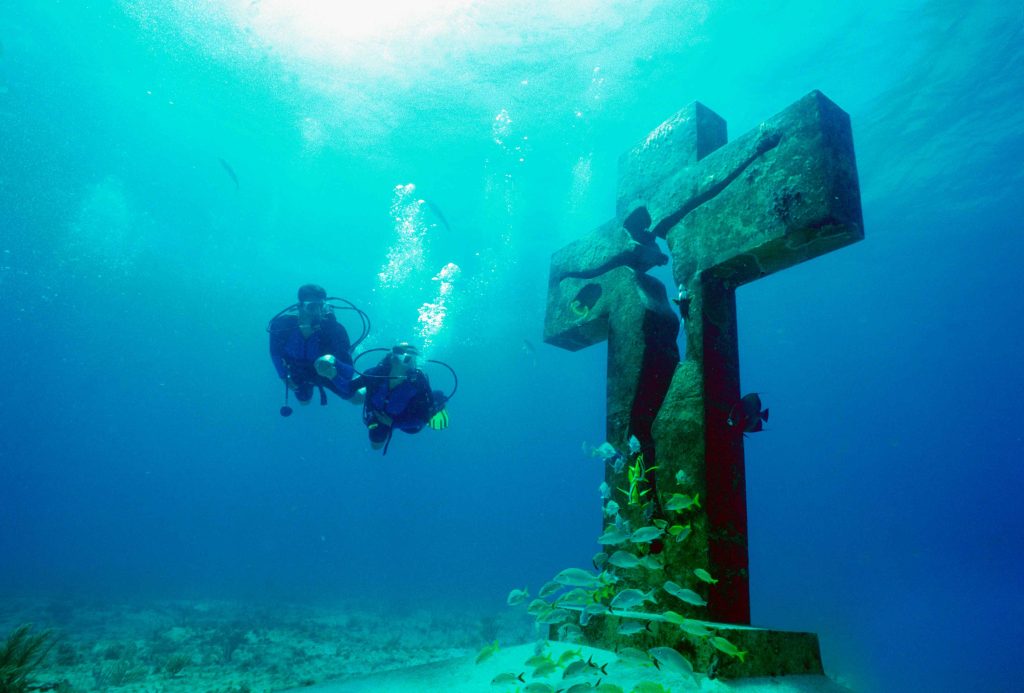
MUSA (Museo Subacuático de Arte) is not an archaeological site in the strict sense, but it has a cultural and conservation purpose that echoes the region's ancient heritage. More than 500 sculptures rest on the seabed in the waters between Cancún and Isla Mujeres, designed both as works of art and as artificial reefs where coral can settle and marine life can grow.
Connection with the past
Many of the MUSA sculptures are human figures, but several evoke cultural and historical themes: nature, local traditions, the relationship between people and the sea. Seen through a mask, with fish moving between them, they have a stillness that feels closer to ritual than to gallery art, and that quietly connects with the Maya legacy on these shores.
4. The Maya legacy on Isla Mujeres
Beyond the individual sites, Maya culture left a deep mark on the island. Isla Mujeres was a sanctuary dedicated to Ixchel, and it is believed to have served as a stop for religious ceremonies and trade along the coastal routes.
That bond has not disappeared. The goddess is still very present on the island, and Maya ceremonies in her honor are held at Punta Sur from time to time, keeping alive the spiritual connection the Maya established here centuries ago.
5. Other historical traces on the island
The Temple of Ixchel is the main archaeological site on Isla Mujeres, but not the only trace of the Maya. Another temple to the goddess is said to have stood where the Hacienda Mundaca is today, the estate that Fermín Mundaca built in the second half of the 19th century (the hacienda has been closed to the public for some years). Remains of smaller structures along the coast and ceramic finds at several points on the island complete the picture: a place where the Maya of the mainland met the sea, and traded across it.